







What's Happening?
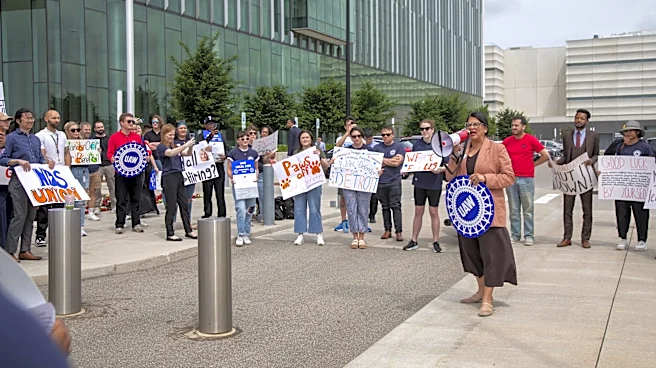
Olathe Families United, a community group, is making a final effort to gather 8,200 signatures by Tuesday's deadline to petition for a state review of the Olathe School Board's decision to close six schools. The schools slated for closure after the 2026-27
school year include Black Bob Elementary, Heritage Elementary, Scarborough Elementary, Tomahawk Elementary, Walnut Grove Elementary, and Indian Trail Middle School. The group formed in response to the Olathe School Board's vote in October and is questioning the criteria used for selecting these schools and the adequacy of information provided to affected families. They aim to have the Kansas State Board of Education review the decision. The campaign has already exceeded its initial goal of 6,100 signatures, but organizers increased the target to 8,200 to account for potential rejections during verification.
Why It's Important?
The potential closure of six schools in Olathe carries significant implications for the affected families, students, and the broader community. School closures can disrupt students' educational continuity, force families to adjust to new school environments, and potentially impact property values in the neighborhoods surrounding the closing schools. For the Olathe School District, the decision reflects ongoing challenges such as declining enrollment or budget constraints, which are common issues faced by school districts across the U.S. The community's organized resistance highlights the importance of local control and transparency in educational decision-making. A state review, if triggered, could set a precedent for how school closure decisions are scrutinized and potentially lead to greater public involvement and accountability in similar situations nationwide.
What's Next?
The immediate next step for Olathe Families United is to successfully collect and submit the required 8,200 signatures by the Tuesday deadline. If they meet this target, the petition will then be presented to the Kansas State Board of Education, which will decide whether to initiate a review of the Olathe School Board's closure decision. The outcome of this review could either uphold the district's plan or potentially lead to a re-evaluation or reversal of the closures. Regardless of the state board's decision, the community's activism may influence future district policies regarding school management and community engagement. The closures are currently scheduled to take effect after the 2026-27 school year, providing a window for further advocacy and potential legal challenges.
Beyond the Headlines
This situation in Olathe reflects a broader national trend where school districts grapple with demographic shifts, budget pressures, and the need to optimize resources. The emotional and social impact of school closures extends beyond mere logistics, often severing community ties and disrupting established social networks. The push for a state review underscores the tension between local school board autonomy and the desire for higher-level oversight when significant community assets are at stake. It also highlights the power of grassroots organizing in challenging institutional decisions, potentially inspiring other communities facing similar issues to mobilize and demand greater transparency and accountability from their local educational authorities. The debate over school selection criteria and information dissemination points to a need for clearer guidelines and more robust public engagement processes in such critical decisions.