
What's Happening?
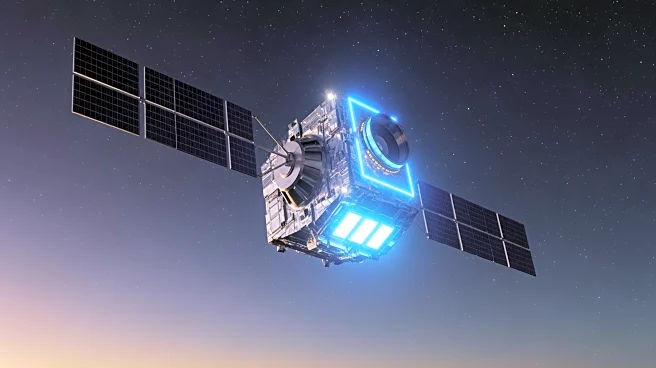
SpaceX is set to launch NASA's Pandora exoplanet observatory aboard a Falcon 9 rocket from Vandenberg Space Force Base. The launch is part of SpaceX's Twilight rideshare mission, which includes approximately
40 co-manifested payloads. Pandora, a small satellite developed under NASA's Astrophysics Pioneers program, aims to study the atmospheric signals of transiting exoplanets by observing starlight that has passed through planetary atmospheres. The mission will involve long-duration observations of about 20 unique planets and their host stars, with the potential to study up to 39 exoplanets over time. The observatory features a 0.45-meter Cassegrain telescope and is expected to operate in a sun-synchronous low Earth orbit. The mission's primary science phase is scheduled to last one year, with data being made publicly available.
Why It's Important?
The Pandora mission represents a significant step in exoplanet exploration, aiming to refine techniques for interpreting atmospheric signals and prioritizing targets for larger telescopes. By providing detailed observations in visible and near-infrared light, Pandora will help scientists better understand the atmospheres of distant planets, potentially identifying those that could support life. The mission's cost-effective approach, with a budget cap near $20 million, highlights its role as a high-impact experiment designed to complement larger observatories. The data collected will guide future searches for habitable worlds and enhance our understanding of planetary systems beyond our own.
What's Next?
Following the launch, Pandora will undergo a one-month commissioning period before beginning its primary science campaign. The mission team, led by the University of Arizona, will conduct a series of observations over the next year, with the goal of releasing data to the public as it becomes available. The success of Pandora could influence future exoplanet missions and the development of new technologies for studying distant worlds. As the mission progresses, scientists will analyze the data to refine their understanding of exoplanetary atmospheres and inform the design of future space telescopes.