









What's Happening?
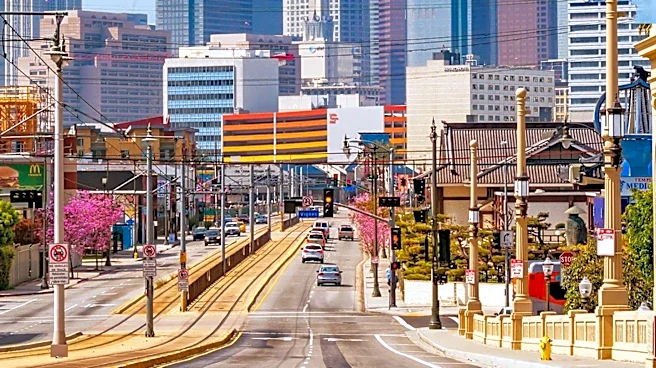
Los Angeles is leveraging the 2026 FIFA World Cup to showcase its upgraded public transit system and prepare for the 2028 Olympics, which are planned to be car-free. The city has introduced new shuttle lines and borrowed buses to accommodate increased
demand during the World Cup, with nearly 50,000 rides taken on rail lines for a single game. The Metro system, often overshadowed by the city's car-centric culture, is being promoted as a viable alternative for event attendees. The initiative aims to familiarize residents and visitors with public transit options, as the Olympics will require attendees to rely on these systems due to the absence of parking at venues.
Why It's Important?
The initiative is significant as it represents a shift in Los Angeles' transportation strategy, aiming to reduce reliance on cars and promote public transit. This move could have long-term benefits for the city's traffic congestion and environmental impact. By improving and expanding the transit system, Los Angeles is positioning itself as a more sustainable and accessible city, potentially influencing urban planning and public transportation policies nationwide. The success of these efforts could set a precedent for other major events and cities looking to reduce their carbon footprint and improve public transit infrastructure.
What's Next?
Looking ahead, Los Angeles plans to continue expanding its transit system, with new stations under construction to connect key areas, including the University of California, Los Angeles, which will serve as the Athlete Village for the 2028 Olympics. The city will need to address safety concerns and improve public perception of the transit system to ensure its success. Metro officials are working to deploy their own police force by 2029 to enhance safety and security. The upcoming Olympics will serve as a critical test for the city's transit capabilities and its ability to manage large-scale events without relying on personal vehicles.