




What's Happening?
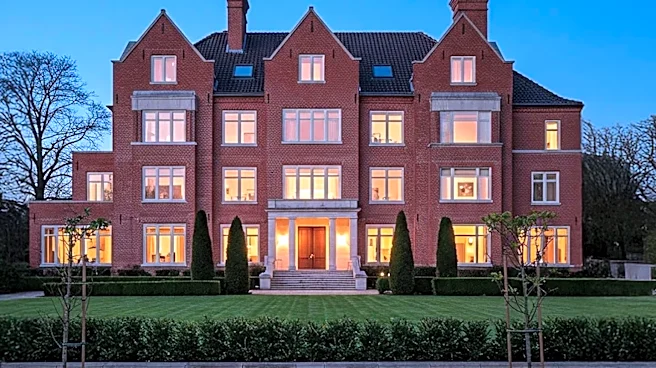
Lynnewood Hall, a 110-room Gilded Age mansion in Pennsylvania, has opened its doors to the public for the first time in over 80 years. The estate, commissioned in 1897 by Peter A.B. Widener and completed in 1899, is currently undergoing extensive restoration.
Visitors can tour the property as it hosts 'Fleur de Villes: The Gilded Age,' a floral installation inspired by characters from HBO's 'The Gilded Age.' The mansion, once dubbed 'The Last of the American Versailles' by Widener's grandson, spans nearly 110,000 square feet and is the second-largest surviving Gilded Age mansion in the U.S. The Lynnewood Hall Preservation Foundation acquired the estate in 2023 for $9 million, initiating multi-phase restoration efforts that could exceed $100 million. The mansion has a storied history, including the tragic loss of two Widener heirs on the Titanic in 1912, and remained largely vacant for 30 years before its recent purchase.
Why It's Important?
The public opening of Lynnewood Hall is significant for historical preservation and cultural tourism in the U.S. It offers a rare glimpse into the opulent lifestyle and architectural grandeur of the Gilded Age, a period of rapid industrial growth and economic change in American history. The substantial investment in its restoration, estimated to be over $100 million, highlights a growing commitment to preserving national heritage sites. This initiative not only saves a significant piece of American architecture from further decay but also creates educational opportunities for the public to understand a pivotal era. The mansion's connection to the Titanic tragedy and its long period of vacancy add layers of historical intrigue, drawing attention to the social and economic dynamics of the late 19th and early 20th centuries. The restoration project also provides a case study in the challenges and costs associated with maintaining large historical properties.
What's Next?
Following the current floral exhibit, the Lynnewood Hall Preservation Foundation plans to host scheduled tours, additional special events, open houses, and volunteer days, though specific dates have not yet been announced. The visitor experience is expected to evolve as restoration efforts progress, with the foundation's CEO and executive director, Edward Thome, indicating that the house will continue to improve with each public return. The multi-phase restoration will include both exterior and interior work, as well as upgrades to better accommodate visitors. The foundation aims to transform the property into a sustainable historical attraction, ensuring its long-term preservation and accessibility to the public. Future plans may also involve further research into the mansion's history and its occupants to enrich the visitor experience.
Beyond the Headlines
The restoration and public opening of Lynnewood Hall underscore a broader societal interest in the Gilded Age, a period often romanticized for its extravagance but also marked by significant social inequality and labor unrest. The mansion serves as a tangible link to this complex era, prompting reflection on the origins of immense wealth and its impact on American society. The architectural details, such as the imported wood paneling from a French château and the intricate ceiling designs, speak to a level of craftsmanship and material sourcing that is rarely seen today, highlighting shifts in construction practices and aesthetic values. The mansion's nickname, 'The American Versailles,' also invites comparisons between European aristocracy and American industrialist wealth, exploring themes of aspiration, imitation, and the unique development of American identity during a period of rapid modernization. The project also raises questions about the ethical responsibilities of preserving such grand estates and making them accessible to a diverse public.