






What's Happening?
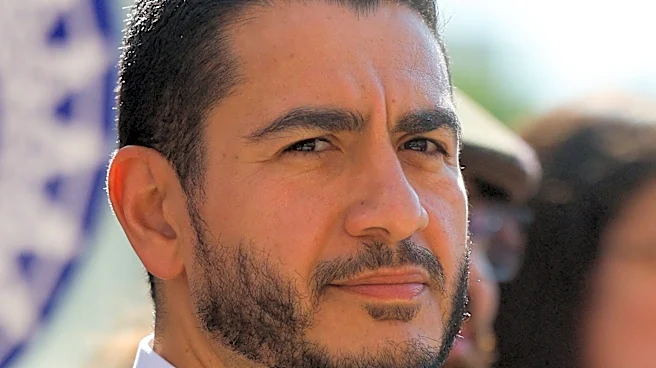
The Council on American-Islamic Relations (CAIR) has criticized a post by President Donald Trump on Truth Social, which compares Michigan Democratic U.S. Senate candidate Abdul El-Sayed and his wife with Trump and the first lady. The post, which features
the headline 'Two VERY DIFFERENT America’s,' includes El-Sayed's full name, Abdulrahman Mohamed El-Sayed, rather than the name he uses publicly. Dawud Walid, executive director of CAIR’s Michigan chapter, described the post as a familiar political tactic aimed at portraying El-Sayed as an outsider. El-Sayed responded to the post on CNN, contrasting his vision of America with Trump's and questioning the affordability of living costs under Trump's vision. Nazita Lajevardi, a political science associate professor at the University of Michigan, noted that the post plays into a broader pattern of political messaging about Muslims and who is considered an American insider or outsider. Lajevardi also mentioned that such messaging can mobilize those targeted into political action.
Why It's Important?
This incident highlights ongoing tensions in U.S. politics regarding identity and belonging, particularly concerning Muslim Americans. The use of El-Sayed's full name in the post is seen as an attempt to emphasize his Muslim identity, which CAIR and others argue is a tactic to alienate him from mainstream American identity. This type of political messaging can have significant implications, potentially influencing voter perceptions and contributing to broader societal divisions. The response from El-Sayed and CAIR underscores the importance of addressing Islamophobia and promoting inclusivity in political discourse. The situation also reflects the high stakes of the Michigan Senate race, one of the most closely watched in the country, where identity politics could play a crucial role in the outcome.
What's Next?
The El-Sayed campaign has not yet responded to requests for further comment on the post. Additionally, the campaign of U.S. Senate candidate Mike Rogers and the White House have not responded to inquiries about the post and CAIR's characterization of it as Islamophobic. As the Senate race progresses, it is likely that identity and inclusivity will remain central themes, potentially influencing campaign strategies and voter engagement. The broader implications of this incident may also prompt further discussions on the role of identity in American politics and the impact of political rhetoric on minority communities.