








What's Happening?
Oil prices have risen due to uncertainties surrounding a fragile two-week ceasefire in the Middle East, which has raised concerns about restricted energy flows through the Strait of Hormuz. Brent crude futures increased by $2.18, reaching $96.93 per barrel,
while U.S. West Texas Intermediate (WTI) crude rose by $3 to $97.41 per barrel. Despite a previous drop below $100 per barrel, market participants remain cautious about the geopolitical risk premium. The Strait of Hormuz, a critical waterway for global oil supply, remains a focal point of concern. Analysts predict continued volatility in oil prices, with no clear resolution in sight regarding U.S.-Iran negotiations. The ceasefire's viability is questioned as regional tensions persist, with Israel's recent attacks on Lebanon and Iran's retaliatory actions against regional oil facilities.
Why It's Important?
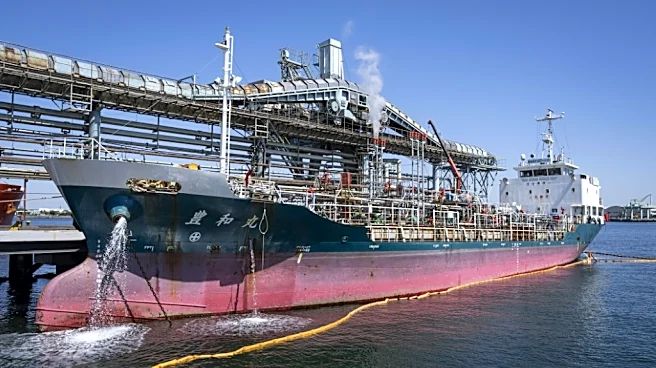
The ongoing uncertainty in the Middle East has significant implications for global oil markets, particularly affecting the U.S. economy and energy sector. The Strait of Hormuz is a vital conduit for about 20% of the world's oil supply, and any disruption can lead to increased oil prices, impacting U.S. consumers and businesses. Elevated oil prices can contribute to inflationary pressures, affecting transportation and manufacturing costs. The geopolitical tensions also pose risks to energy security, prompting concerns over supply stability. The situation underscores the interconnectedness of global energy markets and the potential for regional conflicts to have far-reaching economic consequences.
What's Next?
The future of oil prices and supply stability hinges on the developments in the Middle East. Stakeholders, including governments and energy companies, are closely monitoring the situation. The U.S. and Iran's negotiations could play a crucial role in determining the ceasefire's outcome and the potential reopening of the Strait of Hormuz. Energy companies may need to adjust their strategies to mitigate risks associated with supply disruptions. Additionally, the international community may seek diplomatic solutions to stabilize the region and ensure the free flow of energy resources.