







What's Happening?
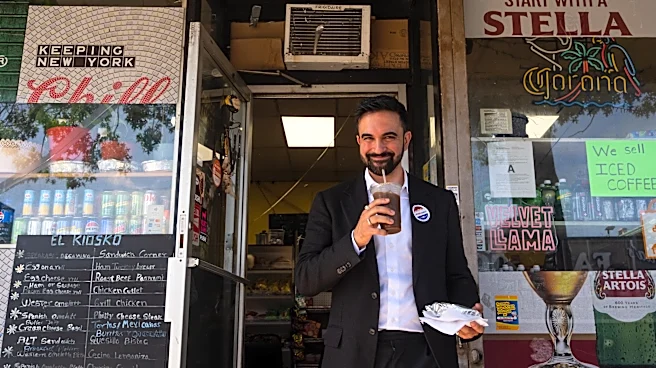
Zohran Mamdani, a prominent figure in New York's Democratic Socialists of America (DSA), has seen his influence grow following recent primary victories in New York City. Candidates backed by Mamdani and the DSA have successfully unseated several incumbents,
reflecting a shift in political power driven by changing demographics. The victories have unsettled some Black political leaders, as younger, middle-class whites and Latinos, many of whom are DSA members, have moved into traditionally Black neighborhoods, altering the political landscape. This shift is part of a broader trend of urban regime change, where new political coalitions are forming in response to demographic changes.
Why It's Important?
The rise of Mamdani and the DSA-backed candidates signifies a shift in urban political dynamics, where traditional power structures are being challenged by new, diverse coalitions. This change reflects broader demographic trends, including the increasing Latino population in urban areas, which is reshaping political priorities and alliances. The shift could lead to policy changes that prioritize social and economic equity, reflecting the concerns of the new political base. This development also highlights the challenges faced by established political leaders in adapting to changing voter demographics and preferences.
Beyond the Headlines
The political changes in New York City are part of a larger national trend where urban areas are experiencing shifts in political power due to demographic changes. This could lead to a reevaluation of political strategies and alliances, as traditional party establishments may need to adapt to remain relevant. The success of DSA-backed candidates may also inspire similar movements in other cities, potentially leading to a broader realignment of political power in urban areas across the country.