






What's Happening?
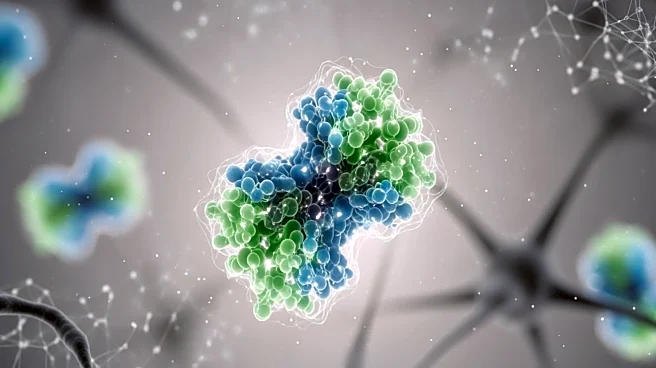
Researchers at Scripps Research have discovered a molecular mechanism that may play a crucial role in Alzheimer's disease. The study, published in Cell Chemical Biology, focuses on a protein called STING, which is part of the body's immune response. In
Alzheimer's, STING undergoes a chemical modification known as S-nitrosylation, making it excessively active and fueling harmful inflammation. This discovery was made using human Alzheimer's brain cells and other experimental models. The researchers found that blocking this chemical modification in a mouse model reduced neuroinflammation. This finding points to a promising new target for Alzheimer's treatments, as it could potentially protect brain cell connections that are typically lost in the disease.
Why It's Important?
The identification of STING's role in Alzheimer's disease could lead to new therapeutic strategies. By targeting the specific chemical modification of STING, researchers hope to reduce inflammation without compromising the immune system's ability to fight infections. This approach could help preserve synapses, the connections between nerve cells, which are crucial for cognitive function. The study's findings could pave the way for the development of drugs that specifically block the harmful overactivation of STING, offering a new avenue for treating Alzheimer's and potentially other neurodegenerative diseases.
What's Next?
The research team is now working on developing small molecules to block the S-nitrosylation of STING. These molecules will be evaluated in future preclinical studies to assess their effectiveness in reducing inflammation and protecting brain cell connections. If successful, this could lead to clinical trials and eventually new treatments for Alzheimer's disease. The study's authors are also exploring the broader implications of their findings, as the S-nitrosylation process has been linked to other diseases, including cancer and Parkinson's disease.