






What's Happening?
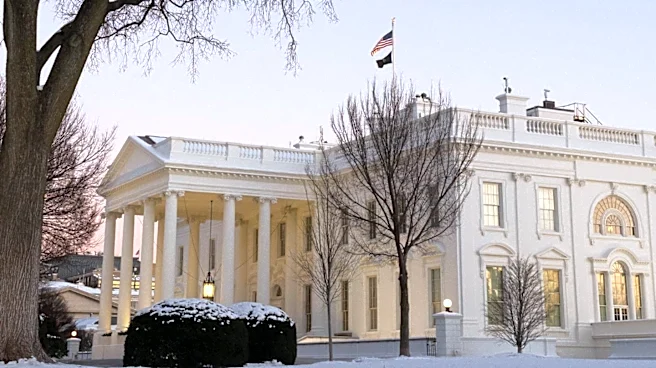
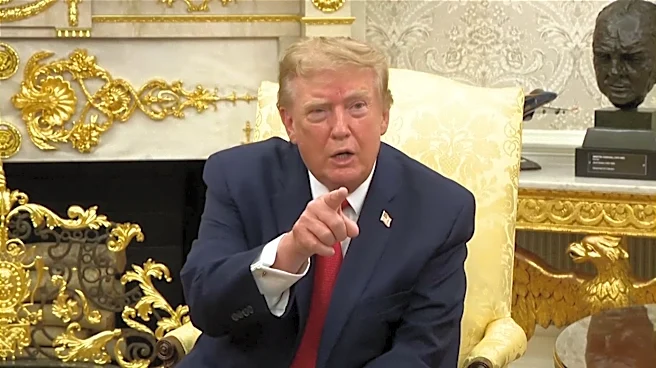
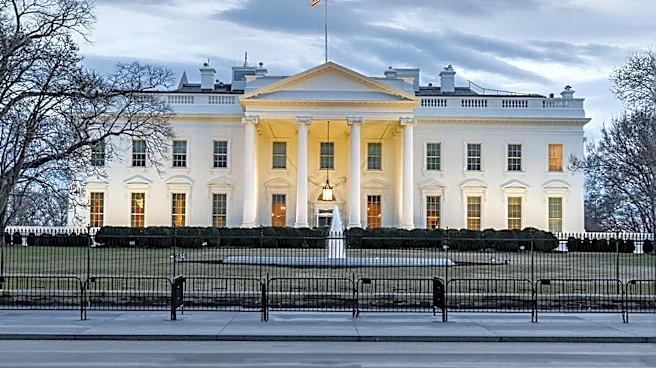
The White House's 'rapid response' account on X (formerly Twitter) launched a personal attack against CNN reporter Kristen Holmes, referencing her children, following a contentious exchange with President Trump. During a Q&A session in the Oval Office,
Holmes questioned President Trump about Democratic Senator Jon Ossoff's claim that President Trump would rather 'travel with your aide Natalie Harp and build the ballroom than do your job as president.' President Trump responded by calling Ossoff 'Pee-Wee Herman' and later reprimanded Holmes, calling her 'disrespectful' and a 'fake reporter' for asking a follow-up question about U.S. and South Korea military drills. The White House account subsequently posted that Holmes was 'a disgraceful, humiliating embarrassment' and that her children would be 'sickened and embarrassed' by her 'disgusting and inhumane question.' CNN issued a statement supporting Holmes, asserting that 'personal attacks on journalists for asking questions are beneath the office and inconsistent with the principles of a free press.' This incident follows previous instances where President Trump has criticized female journalists, including CNN's Kaitlan Collins.
Why It's Important?
This incident highlights escalating tensions between the White House and the press, particularly concerning female journalists. The direct involvement of a reporter's family in an official White House social media attack represents a significant departure from traditional political discourse and journalistic engagement. It raises concerns about the erosion of professional boundaries and the potential chilling effect on press freedom, as journalists may face personal repercussions for asking critical questions. The White House's use of a 'rapid response' account to launch such an attack also underscores the evolving nature of political communication in the digital age, where official channels can be used for highly personalized and aggressive messaging. This approach could further polarize public perception of the media and undermine the role of a free press in holding power accountable. The support from CNN for Holmes emphasizes the media's stance against such personal attacks and their commitment to defending their journalists.
What's Next?
The immediate aftermath will likely involve continued public debate and media scrutiny regarding the White House's conduct and its implications for press relations. CNN and other media organizations may continue to condemn the personal attacks, potentially leading to further statements or discussions about journalistic ethics and the treatment of reporters. It remains to be seen whether the White House will retract or apologize for the posts, or if they will double down on their stance. This event could also influence how journalists approach future interactions with President Trump and his administration, potentially leading to more cautious or, conversely, more assertive questioning. The broader political landscape may also see this incident used by critics of the administration to highlight perceived attacks on democratic institutions, while supporters may defend the White House's actions as a response to what they view as biased reporting. The long-term impact could include a further deterioration of trust between the press and the executive branch.
Beyond the Headlines
This event delves into deeper implications concerning the role of the press in a democratic society and the boundaries of political rhetoric. The targeting of a journalist's children crosses a line that traditionally has been considered off-limits in political disagreements, raising ethical questions about the weaponization of personal lives in public discourse. It could contribute to a climate where journalists, particularly women, face increased harassment and intimidation, potentially impacting their ability to report freely and objectively. Furthermore, the incident reflects a broader trend of delegitimizing news organizations and individual reporters, which can undermine public trust in information and democratic processes. The use of social media by official government accounts for such attacks also highlights the challenges of maintaining decorum and professionalism in an era of instant and often unfiltered communication. This could set a dangerous precedent for future administrations and political figures, blurring the lines between legitimate criticism and personal vilification.