








What's Happening?
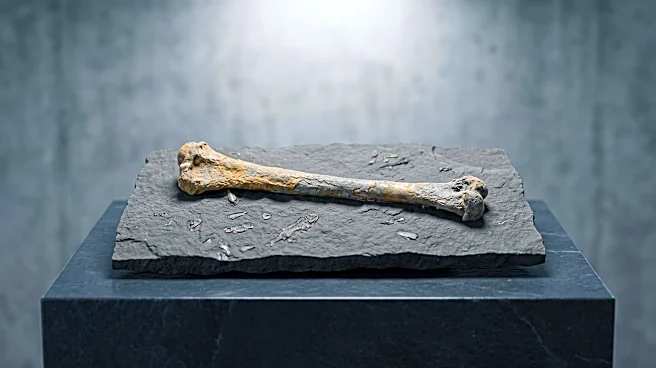
A new species of ancient bird, Tenuicruris piscanexum, has been identified from two exceptionally rare Cretaceous bird bones discovered near Richmond, Queensland, Australia. This marks only the second formally named Cretaceous bird from Australia. The
bones, a tarsometatarsus (fused foot bones) and a tibiotarsus, were found by Kevin Petersen in the 'fish mash layer,' a fossil-rich stratum. Dr. Matt White of the University of New England recognized them as bird bones, and non-destructive imaging at the Australian Nuclear Science and Technology Organisation (ANSTO) by Dr. Joseph Bevitt allowed for 3D visualization and comparison. The new taxon, named for its 'slender leg' (Tenuicruris) and its discovery in a 'fish-rich layer' (piscanexum), has been placed within Enantiornithes, a dominant clade of Mesozoic birds. This discovery significantly increases the number of comparable Cretaceous bird specimens from Australia and provides new data on avian diversity and paleoecology in the Toolebuc Formation, which is approximately 105 million years old.
Why It's Important?
The identification of Tenuicruris piscanexum is important for understanding the ancient ecosystems of Australia and the global diversity of birds during the Cretaceous period. Cretaceous bird fossils are extremely scarce in Australia, with fewer than a dozen isolated bones reported prior to this discovery. This new species doubles the number of formally named Cretaceous bird taxa from the continent, offering crucial insights into avian evolution and distribution. The Toolebuc Formation, where the fossils were found, is already known for its rich marine assemblage, including pliosaurs, plesiosaurs, turtles, sharks, and pterosaurs. The addition of Tenuicruris piscanexum to this faunal list provides a more complete picture of the inland sea ecosystem that existed 105 million years ago. This discovery highlights the ongoing importance of amateur fossil hunters and public collecting areas in contributing to significant paleontological findings, as many important specimens in Kronosaurus Korner's collections were found by non-professionals.
What's Next?
The research on Tenuicruris piscanexum has been published in the Journal of Vertebrate Paleontology, making the findings accessible to the broader scientific community. This publication will likely stimulate further research into Cretaceous avian diversity in Australia and potentially lead to re-examinations of previously discovered isolated bird bones. Continued exploration of the Richmond fossil-hunting areas, particularly by individuals who are becoming more adept at recognizing small, fragile bones, is expected to yield more discoveries. These future finds could further broaden our understanding of Cretaceous ecosystems in Australia and provide additional comparative specimens for phylogenetic analyses. The detailed study of these rare fossils, including their morphology and placement within the Enantiornithes clade, will contribute to ongoing efforts to reconstruct the evolutionary history of birds.
Beyond the Headlines
The discovery of Tenuicruris piscanexum underscores the profound impact of rare fossil finds on our understanding of Earth's ancient past. The scarcity of Cretaceous bird fossils in Australia makes each new discovery exceptionally valuable, providing unique windows into a period when birds were undergoing significant evolutionary diversification. This find also highlights the collaborative nature of paleontology, involving amateur enthusiasts, museum curators, and university researchers, all contributing to the scientific process. The use of advanced imaging techniques, such as those employed at ANSTO, demonstrates how technology is revolutionizing the study of fossils, allowing for non-destructive analysis and detailed visualization of specimens embedded in rock. This interdisciplinary approach is crucial for piecing together the complex puzzle of prehistoric life and understanding the long-term shifts in biodiversity that have shaped our planet.