



What's Happening?
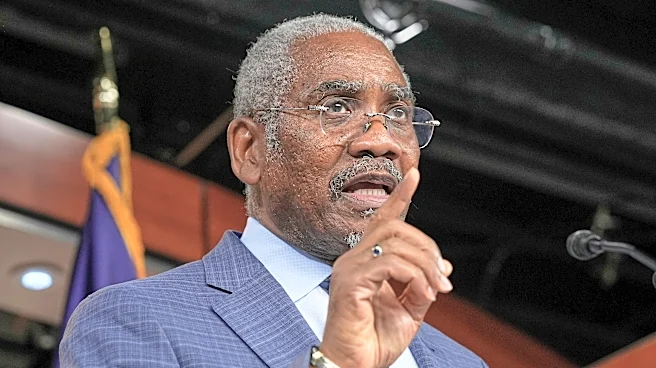
The full Maryland Congressional Delegation, including U.S. Senators Chris Van Hollen and Angela Alsobrooks, and U.S. Representatives Steny Hoyer, Kweisi Mfume, Andy Harris, Jamie Raskin, Glenn Ivey, Sarah Elfreth, April McClain Delaney, and Johnny Olszewski,
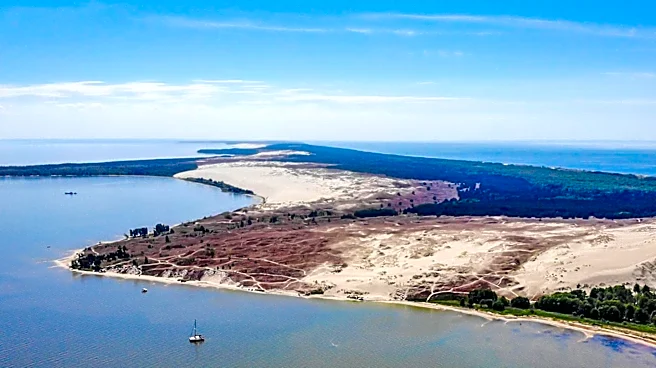
has issued a joint statement condemning the Trump administration's decision to revoke a 2009 Executive Order concerning the Chesapeake Bay. This Executive Order had declared the Chesapeake Bay a national treasure and established a coordinated federal strategy for its protection and restoration. This strategy included supporting state-led efforts on water quality goals, pollution limits, agricultural preservation, stormwater management, and climate resiliency. The delegation asserts that the revoked order provided vital federal resources for improving the health and productivity of the Chesapeake Bay and its surrounding area.
Why It's Important?
The revocation of this Executive Order is significant because it removes coordinated federal backing for the Chesapeake Bay Watershed Agreement, which the Maryland Delegation argues risks undermining the future health of the Bay. The Chesapeake Bay is vital to the lives and livelihoods across Maryland and the greater region, supporting numerous businesses and communities. The federal resources and coordinated strategy provided by the 2009 order were crucial for advancing water quality improvements and environmental protection efforts. Without this federal framework, state-led initiatives may face challenges in securing funding and achieving their restoration goals. The delegation views this decision as shortsighted and harmful, emphasizing that the Bay's health is intrinsically linked to the economic and ecological well-being of the region. The move could lead to a fragmentation of efforts and potentially slow down or reverse progress made in restoring this critical ecosystem.
What's Next?
The Maryland Congressional Delegation has pledged to continue fighting for the Chesapeake Bay, despite the Trump administration's decision. This suggests that lawmakers will explore alternative avenues to secure federal support and maintain restoration efforts. This could involve legislative actions, increased advocacy, or seeking new partnerships to fill the void left by the revoked Executive Order. The decision may also galvanize environmental groups and local communities to intensify their own efforts and pressure for continued protection of the Bay. The long-term implications for water quality, marine life, and the regional economy will depend on the ability of state and local entities, along with continued congressional support, to adapt and sustain restoration initiatives without the previously established federal coordination. The political discourse surrounding environmental protection and federal oversight of natural resources is likely to intensify.
Beyond the Headlines
The Trump administration's decision to revoke the Chesapeake Bay Executive Order highlights a broader philosophical divide regarding environmental governance and the role of the federal government in conservation. This action reflects a preference for reduced federal intervention and potentially a shift towards state-centric approaches to environmental management. However, for an ecosystem as vast and interconnected as the Chesapeake Bay, which spans multiple states, a coordinated federal strategy has historically been seen as essential for effective restoration. The move could set a precedent for how other large-scale environmental initiatives are managed, potentially leading to similar rollbacks in federal oversight for other national treasures. It also underscores the vulnerability of environmental protections to changes in presidential administrations and their policy priorities, raising questions about the long-term stability and continuity of conservation efforts in the U.S.