
What's Happening?
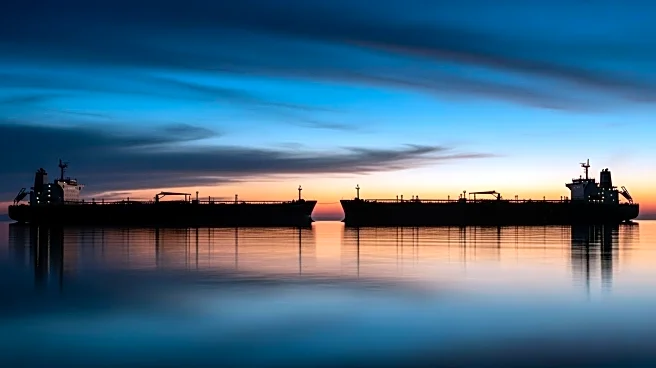
Four tankers that had left Venezuela in 'dark mode' have returned to its waters, according to state company PDVSA and TankerTrackers.com. These tankers, which had their transponders off, were part of a flotilla
that left Venezuela in defiance of a U.S. embargo imposed by President Trump. The embargo has significantly reduced Venezuela's oil exports. The U.S. recently seized one of these tankers but released it back to Venezuela. The return of these tankers coincides with ongoing negotiations between Caracas and Washington for a $2 billion oil supply deal. President Trump has met with oil executives to discuss the progress of these arrangements, and U.S. trading houses have received licenses to negotiate Venezuela's exports.
Why It's Important?
The return of the tankers and the ongoing negotiations highlight the complex geopolitical dynamics surrounding Venezuela's oil industry. The U.S. embargo aims to pressure the Venezuelan government, but the return of the tankers suggests challenges in enforcing the blockade. The negotiations for a new oil supply deal could have significant economic implications for Venezuela, which relies heavily on oil exports. The involvement of major trading houses like Vitol and Trafigura indicates potential shifts in global oil markets and the strategic interests of the U.S. in the region.
What's Next?
As negotiations continue, the international community will be watching for any changes in U.S. policy towards Venezuela. The outcome of these talks could affect global oil prices and the political landscape in Venezuela. The U.S. may face diplomatic challenges in balancing its strategic interests with international law and relations with other countries involved in the Venezuelan oil market.