






What's Happening?
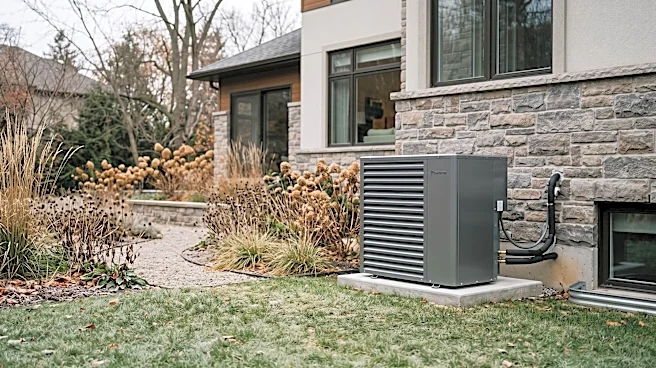
A new report from the energy think tank RMI indicates that heat pumps can be widely adopted across the U.S. without overwhelming the existing electrical grid. The report challenges the common misconception that a mass transition to electric heat pumps would
necessitate significant grid expansion, including the construction of new gas-fired power plants. According to RMI, three-quarters of U.S. homes, approximately 109 million, could switch to heat pumps due to existing 'headroom' in the grid during winter months. This headroom refers to the difference between the grid's generation capacity and demand, which is typically lower in winter as many homes use gas furnaces for heating, reducing the electrical load. Ryan Shea, a manager in RMI's buildings team, stated that utilizing this available grid capacity would spread costs across more kilowatt-hours, benefiting consumers with lower electricity rates.
Why It's Important?
This report is significant for U.S. energy policy and climate goals, as it provides data-driven evidence supporting the feasibility of widespread heat pump adoption. By debunking the myth of grid collapse, it removes a major barrier to accelerating the transition away from fossil fuel-based heating systems. The potential for heat pumps to significantly reduce greenhouse gas emissions and lower electric bills by over 20 percent in some states offers substantial environmental and economic benefits. For consumers, this means more efficient and cost-effective heating and cooling options. For utilities and policymakers, it suggests that existing infrastructure can support a substantial shift to electrification, potentially reducing the need for costly new power plant construction and contributing to a more resilient and flexible energy grid, especially with the integration of renewables and battery storage.
What's Next?
The findings of this report are expected to inform and potentially accelerate policy initiatives aimed at promoting heat pump adoption across the U.S. States and municipalities may consider implementing or expanding rebate programs and incentives to encourage homeowners to switch from traditional furnaces and electric resistance heating. The report also highlights the importance of replacing old air conditioning units with heat pumps when they fail, as a strategic step towards electrification. Furthermore, the discussion around the housing crisis and the construction of more apartments could inadvertently lead to increased heat pump installations, as new builds often incorporate more energy-efficient technologies. The focus will likely shift towards educating the public and stakeholders about the benefits and feasibility of heat pumps, aiming to establish clear installation goals within affordability plans.
Beyond the Headlines
The RMI report's findings have deeper implications for the future of energy infrastructure and consumer behavior in the U.S. It suggests a paradigm shift where the existing grid, often perceived as fragile, can be optimized to support a cleaner energy future. This could lead to increased investment in smart grid technologies and demand-side management strategies to further balance energy loads. Ethically, the report underscores the responsibility of policymakers and industry leaders to disseminate accurate information about climate solutions, countering misinformation that can hinder progress. Culturally, a successful transition to heat pumps could normalize electric heating and cooling, fostering greater public acceptance of electrification as a key component of climate action. The economic benefits, particularly the potential for lower electricity rates, could also address energy poverty and improve quality of life for vulnerable populations.