





What's Happening?
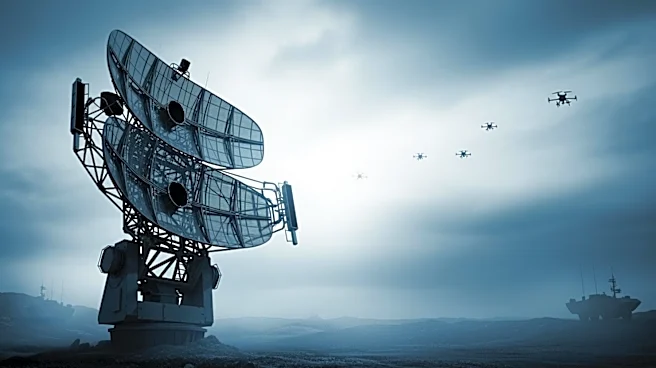
Ukrainian mobile air defense units are increasingly relying on interceptor drones to counter Russian drone attacks, which have been modified to fly at higher altitudes and speeds. These units, operating near Kyiv, are training with advanced interceptor drones like
the P1-Sun and Bullet, developed by Ukrainian companies Skyfall and General Cherry. Despite the technological advancements, these drones face challenges such as electronic interference and adverse weather conditions. The units continue to use .50 caliber M2 Browning machine guns, a nearly century-old American weapon, for low-altitude threats. The integration of these technologies is part of a broader strategy to enhance Ukraine's air defense capabilities.
Why It's Important?
The adaptation of Ukrainian air defense units to incorporate interceptor drones highlights the evolving nature of modern warfare, where electronic and drone warfare play significant roles. This shift is crucial for Ukraine as it seeks to protect its cities from Russian drone attacks, which have become more sophisticated. The use of interceptor drones offers a cost-effective and scalable solution to counter these threats, potentially reducing the impact of Russian attacks on Ukrainian infrastructure and civilian areas. The success of these tactics could influence other nations facing similar threats, prompting a reevaluation of traditional air defense strategies.
What's Next?
As Ukraine continues to refine its use of interceptor drones, further advancements in drone technology and electronic warfare are expected. The ongoing training and adaptation by Ukrainian forces suggest a commitment to enhancing their defensive capabilities. This could lead to increased production and deployment of interceptor drones, as well as potential collaborations with other countries facing similar threats. The effectiveness of these strategies will likely influence future military tactics and defense policies, both within Ukraine and internationally.
Beyond the Headlines
The reliance on both modern and traditional weaponry by Ukrainian forces underscores the complexity of adapting to new warfare technologies. The integration of interceptor drones with existing defense systems reflects a pragmatic approach to resource constraints and the need for versatile solutions. This development also raises questions about the ethical implications of drone warfare and the potential for escalation in electronic warfare tactics. As Ukraine navigates these challenges, the broader implications for international security and military strategy continue to evolve.