
What's Happening?
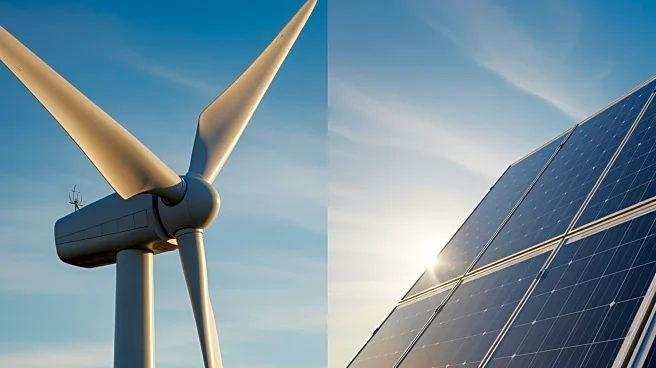
In 2025, renewable energy sources, including wind and solar, have overtaken coal as the world's primary source of electricity. This shift is largely driven by China's significant expansion in clean energy production
and its dominance in exporting clean-energy technologies. The UK has also made notable progress, with wind energy becoming the largest single energy source, covering about one-third of the country's demand. These developments represent a significant milestone in global efforts to transition to sustainable energy sources and reduce reliance on fossil fuels.
Why It's Important?
The transition to renewable energy marks a critical step in addressing climate change and reducing global carbon emissions. As countries like China and the UK lead the way in clean energy adoption, they set a precedent for other nations to follow. This shift not only contributes to environmental sustainability but also has economic implications, as the renewable energy sector creates jobs and stimulates technological innovation. The global move towards renewables reflects a growing recognition of the need for sustainable energy solutions to combat climate change and ensure energy security.
What's Next?
Continued investment in renewable energy infrastructure and technology is expected, with countries aiming to further reduce their carbon footprints. The development of energy storage solutions, such as the UK's liquid-air-battery storage facility, will be crucial in managing the intermittent nature of renewable energy sources. International cooperation and policy frameworks will play a key role in facilitating the global transition to clean energy. As renewable energy becomes more cost-competitive, it is likely to drive further declines in coal usage and accelerate the shift towards a sustainable energy future.