
What's Happening?
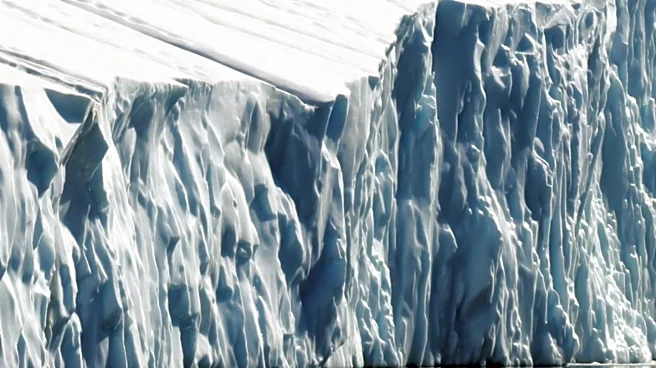
NASA's NISAR satellite, a collaboration with the Indian Space Research Organisation, has captured a striking image of a glacier in Antarctica that resembles a hummingbird. This image, taken by the Synthetic
Aperture Radar onboard, reveals intricate details of glacier movements and crevasses on the mountain's surface. The radar's ability to penetrate snow and ice provides insights into the glacier's dynamics, which are not visible through optical imagery. The data from NISAR, which began public release on July 20, 2026, aims to aid researchers in studying and protecting the planet's changing environment.
Why It's Important?
The NISAR satellite's ability to provide detailed radar imagery of glaciers is crucial for understanding the impacts of climate change on polar ice. By revealing the hidden movements and properties of glaciers, scientists can better predict future changes in sea levels and global climate patterns. This information is vital for policymakers and environmentalists working to mitigate the effects of climate change. The public availability of NISAR's data democratizes access to critical environmental information, potentially leading to more informed decisions and strategies for climate action.
What's Next?
As NISAR continues to collect and release data, researchers worldwide will have the opportunity to analyze the information to enhance their understanding of glacial dynamics and climate change. The ongoing study of these satellite images could lead to new discoveries about the Earth's polar regions and contribute to global efforts to address environmental challenges. The collaboration between NASA and ISRO may also pave the way for future joint missions aimed at monitoring and protecting the planet.