








What's Happening?
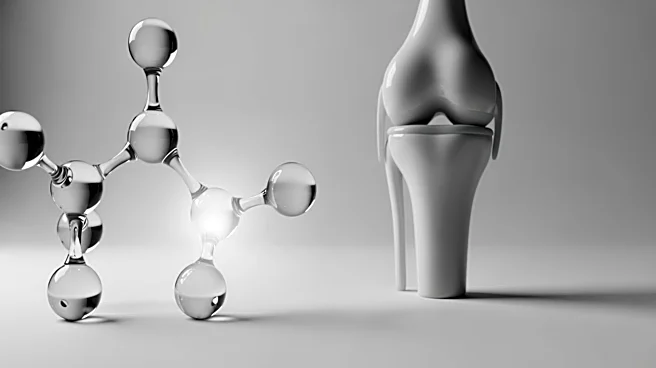
Researchers at the University of Colorado Boulder have developed a new injection that has shown promising results in repairing damaged joints in animal studies. The injection, which uses a drug already approved for other medical uses, has been observed
to restore arthritic joints to a healthy state within weeks. The treatment involves tiny particles that release the drug in bursts, maintaining repair signals in the joint for months. This approach could potentially offer a new method for treating osteoarthritis, a condition affecting millions worldwide, by focusing on joint repair rather than pain management.
Why It's Important?
This development represents a significant shift in the treatment of osteoarthritis, which currently lacks a cure and primarily focuses on pain management. If successful in human trials, this injection could reduce the need for joint replacement surgeries and improve the quality of life for patients suffering from joint damage. The potential to repair joints rather than replace them could lead to a paradigm shift in how osteoarthritis is treated, offering hope for a more effective and less invasive solution.
What's Next?
The research team plans to move forward with safety and toxicology testing before initiating human trials, which are expected to begin in late 2027. These trials will focus on ensuring the treatment's safety and efficacy in humans. If successful, this could pave the way for a new standard in osteoarthritis treatment, potentially reducing the burden of joint replacement surgeries and improving patient outcomes.