
What's Happening?
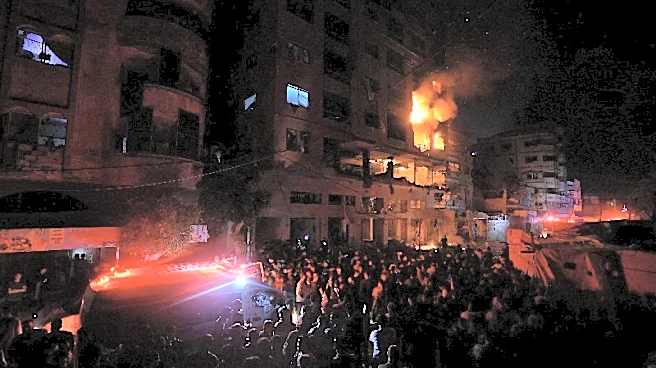
An Israeli airstrike in Gaza has resulted in the death of Izz al-Din al-Haddad, the leader of Hamas' military wing. According to the Israeli military, al-Haddad was one of the last surviving architects
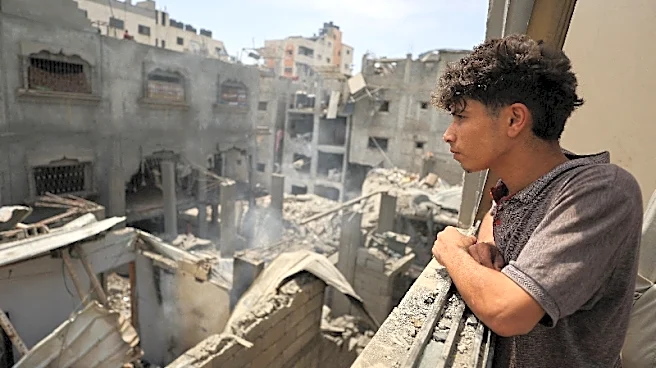
of the October 7, 2023, attacks on Israel, which led to the current conflict. The airstrike occurred on Friday, and Hamas confirmed al-Haddad's death. The ceasefire between Israel and Hamas remains fragile, with ongoing accusations of violations from both sides. The conflict has resulted in significant casualties, with over 850 people killed in Gaza since the ceasefire began, according to Gaza's Health Ministry. Al-Haddad's death is seen as a significant operation by Israel, which continues to target key figures in Hamas.
Why It's Important?
The killing of Izz al-Din al-Haddad is a critical development in the ongoing conflict between Israel and Hamas. As a senior military leader, al-Haddad played a significant role in orchestrating attacks against Israel, making his death a strategic victory for the Israeli military. This event could potentially alter the power dynamics within Hamas and impact the group's operational capabilities. The fragile ceasefire is at risk of further destabilization, which could lead to an escalation in violence. The ongoing conflict has severe humanitarian implications for the residents of Gaza, who continue to suffer from the consequences of military actions and blockades.
What's Next?
The death of al-Haddad may lead to retaliatory actions from Hamas, potentially escalating the conflict further. Israel is likely to continue its military operations targeting Hamas leaders and infrastructure. The international community may increase diplomatic efforts to stabilize the ceasefire and address the humanitarian crisis in Gaza. The situation remains volatile, with the potential for further violence and instability in the region.
Beyond the Headlines
The ongoing conflict between Israel and Hamas raises significant ethical and legal questions regarding the conduct of military operations and the protection of civilians. The use of airstrikes in densely populated areas like Gaza City poses a high risk of civilian casualties, which can exacerbate humanitarian crises and fuel further animosity. The international community faces challenges in mediating peace and ensuring compliance with international humanitarian law. Long-term solutions require addressing underlying issues such as territorial disputes, political recognition, and economic development in the region.