





What's Happening?
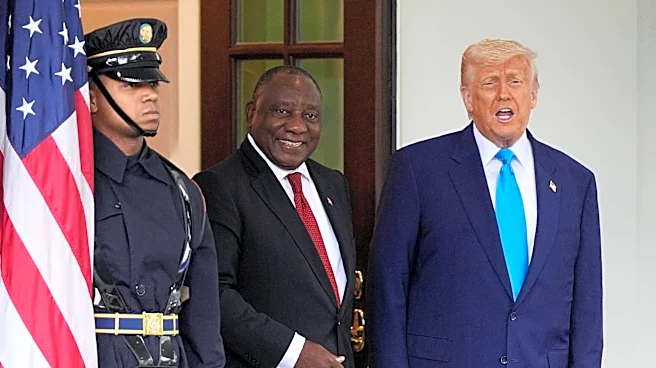
President Trump has announced an expansion of the U.S. refugee program to include an additional 10,000 places for white South Africans, citing increased racially motivated violence against them. This decision raises the total number of refugee places for white South Africans to 17,500.
The South African government denies these allegations, stating that violence affects all races and is not racially motivated. The move has sparked debate over the validity of claims regarding the persecution of white Afrikaners and the broader implications for U.S.-South Africa relations.
Why It's Important?
The expansion of the refugee program for white South Africans by President Trump highlights ongoing racial tensions and the complexities of international refugee policies. This decision could strain diplomatic relations between the U.S. and South Africa, as the latter disputes the claims of racial persecution. The move may also influence domestic U.S. politics, as it aligns with broader narratives of racial and immigration policies under the Trump administration. The situation underscores the challenges in addressing racial violence and the role of international intervention in domestic affairs.
Beyond the Headlines
The decision to expand the refugee program for white South Africans raises questions about the criteria for refugee status and the potential for political motivations in such decisions. It also highlights the historical context of racial dynamics in South Africa and the legacy of apartheid. The move may prompt discussions on the effectiveness of affirmative action policies and the portrayal of racial issues in international media. Additionally, it could influence perceptions of U.S. foreign policy priorities and its approach to human rights issues globally.