


What's Happening?
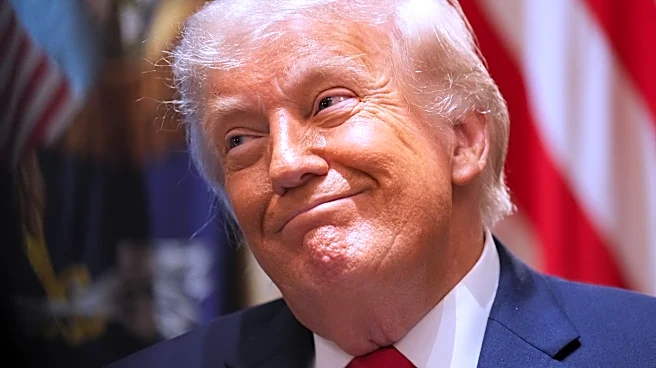
A federal judge in Washington, D.C., has decided not to temporarily block President Trump's executive order aimed at restricting voting by mail. U.S. District Judge Carl Nichols, a Trump appointee, issued the ruling, which leaves the executive order in place
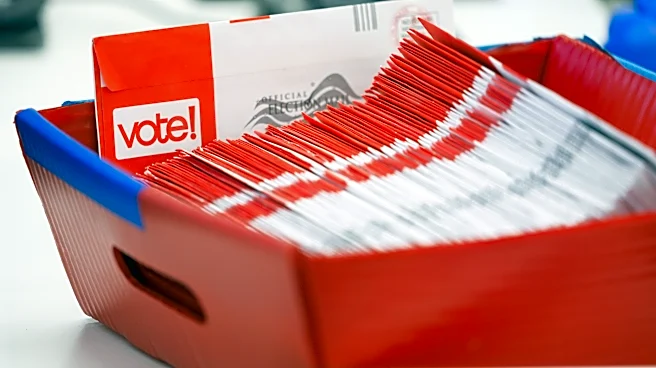
for the time being. The order, signed on March 31, directs the Department of Homeland Security and the Social Security Administration to create lists of adult U.S. citizens for state election officials and mandates the U.S. Postal Service to deliver mail-in ballots only to those on the lists. The decision comes amid ongoing legal challenges from Democrats, voting rights groups, and several states, who argue that the order oversteps presidential authority and infringes on state powers to regulate elections. The ruling allows the order to stand as federal agencies continue to deliberate on its implementation.
Why It's Important?
The decision to uphold President Trump's executive order on voting by mail has significant implications for the upcoming elections and the broader debate over voting rights in the United States. The order's critics argue that it could lead to voter suppression by imposing additional barriers to mail-in voting, which has become increasingly popular, especially among Democrats. The ruling also highlights the ongoing tension between federal and state powers in regulating elections, as the Constitution grants states the primary authority to set election rules. The outcome of this legal battle could set a precedent for future executive actions related to election administration and voter access.
What's Next?
As the legal challenges to President Trump's executive order continue, another federal judge is expected to issue a ruling on similar lawsuits in Boston in the coming weeks. The outcome of these cases could further influence the implementation of the order and its impact on mail-in voting. Additionally, the Justice Department and other federal agencies are working to ensure the order's goals are met, which may involve further legal and administrative actions. Stakeholders, including state election officials and voting rights advocates, will likely continue to monitor and respond to developments in this case.