


What's Happening?
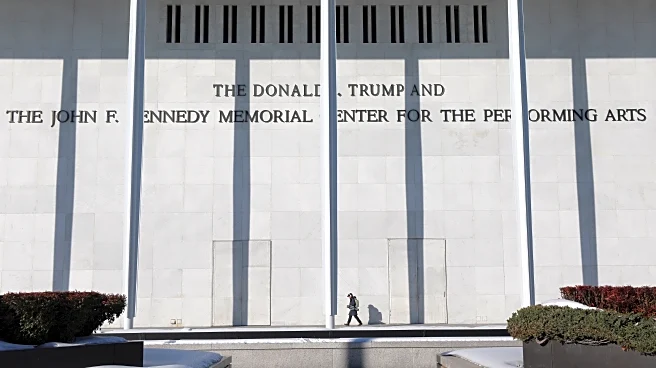
A coalition of cultural and architectural preservation organizations has filed a lawsuit in a Washington, D.C. federal court to halt the Trump administration's Kennedy Center reconstruction project. This legal action is part of a broader dispute over
the architectural direction of the nation's capital under President Trump's leadership. The administration's plans include a new ballroom at the White House, a 250-foot arch near Arlington National Cemetery, and other significant changes to federal buildings. These projects have sparked controversy due to their scale and the administration's approach to bypassing traditional advisory panels, which have historically influenced such developments.
Why It's Important?
The legal challenges against the Trump administration's architectural projects highlight tensions between preserving historical aesthetics and implementing new visions for Washington, D.C. The outcome of these cases could set precedents for presidential authority over federal property and influence future urban planning in the capital. Stakeholders, including preservationists and veterans, argue that some projects, like the proposed arch, could disrupt symbolic views and disrespect historical sites. The administration's actions also raise questions about the balance of power between the presidency and advisory bodies traditionally involved in such decisions.
What's Next?
The court's decision on the Kennedy Center project and other proposed changes will be pivotal. If the court rules against the administration, it could halt or significantly alter the planned developments. Additionally, the upcoming congressional elections could impact these projects, as a shift in congressional power might lead to increased scrutiny or legislative action to limit presidential authority in urban planning. The legal and political outcomes will likely influence how future administrations approach federal architectural projects.
Beyond the Headlines
The controversy over the architectural changes in Washington, D.C. reflects broader cultural and political dynamics. President Trump's emphasis on classical architecture and large-scale projects can be seen as an assertion of symbolic power, aiming to leave a lasting visual legacy. This approach has sparked debates about the role of aesthetics in political messaging and the potential for architecture to serve as a tool for political expression. The situation underscores the complex interplay between art, politics, and public space in shaping national identity.