




What's Happening?
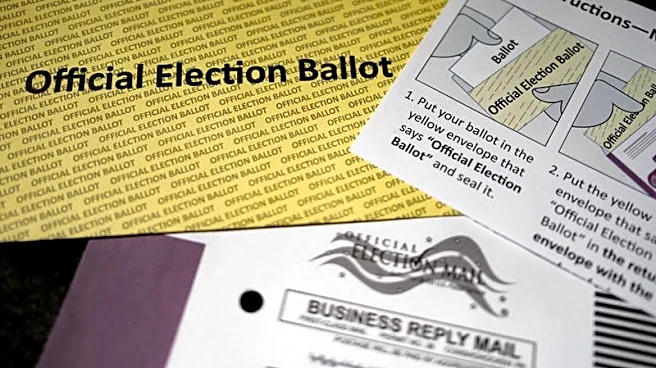
U.S. Rep. Terri Sewell, a Democrat representing Alabama’s 7th Congressional District, has criticized a U.S. Supreme Court decision that allowed certain restrictions on mail-in voting, stemming from an executive order by President Trump, to proceed. The
Supreme Court's order, issued on August 24 in the case of Trump v. California, stayed a lower-court injunction, concluding that states challenging the executive order were unlikely to establish standing at that stage. This decision means that parts of President Trump’s executive order, which includes directives for federal agencies to create citizenship lists for states, investigate election officials issuing federal ballots to ineligible individuals, and implement new U.S. Postal Service requirements for absentee ballots, can move forward while litigation continues. Sewell, who is also the ranking member on the House Elections Subcommittee, stated on August 25 that this decision could lead to 'chaos and confusion' just before the November midterm elections. She maintains that voting by mail is secure and has pledged to continue opposing any restrictions that she believes could make voting more difficult for citizens. The ongoing litigation will further determine the constitutionality of the executive order.
Why It's Important?
This Supreme Court decision carries significant implications for the integrity and accessibility of the U.S. electoral process, particularly concerning mail-in voting ahead of the November midterm elections. The ability for parts of President Trump’s executive order to proceed could introduce new complexities and potential barriers for voters, especially those who rely on mail-in ballots. Critics, like Rep. Sewell, argue that such restrictions could disenfranchise eligible voters and create confusion, thereby impacting voter turnout and the overall fairness of elections. Conversely, supporters of tighter election rules contend that these measures are essential for protecting election integrity by preventing potential fraud. The debate highlights a fundamental tension between ensuring broad voter access and safeguarding against electoral malfeasance. The outcome of this ongoing legal battle will shape how future elections are administered and could influence the balance of power between federal and state authorities in election matters. For U.S. citizens, the decision could mean changes in how they register to vote, receive ballots, and cast their votes, potentially affecting millions.
What's Next?
Further litigation regarding President Trump's executive order on mail-in voting is pending, meaning the ultimate legality and full implementation of all provisions are yet to be determined. The Supreme Court's recent action only addressed the injunction's status during the ongoing case, not the final constitutionality of the executive order itself. This suggests that legal challenges will continue, potentially leading to more rulings that could either uphold or strike down various aspects of the order. Political leaders, including Rep. Sewell, are expected to maintain their advocacy efforts, with Democrats likely continuing to push for expanded voting access and Republicans emphasizing election security. States will also be closely watching these developments, as the executive order could impact their traditional authority over election administration. Depending on the final legal outcomes, there could be significant changes to voting procedures across the country, potentially requiring states to adapt their election protocols. The upcoming November midterm elections will serve as a critical test for any implemented changes, and public reaction to these voting restrictions will likely influence future legislative and judicial actions.
Beyond the Headlines
The Supreme Court's decision on mail-in voting restrictions delves into deeper constitutional and societal questions regarding the balance of power between federal and state governments, as well as the fundamental right to vote. The executive order's directive for federal agencies to create citizenship lists for states and investigate election officials raises concerns about federal overreach into areas traditionally managed by states. This could set a precedent for increased federal intervention in state-level election processes, potentially eroding states' autonomy. Ethically, the debate centers on whether the pursuit of election integrity should ever come at the cost of voter accessibility. Critics argue that making voting more difficult, even under the guise of security, disproportionately affects marginalized communities and could lead to voter suppression. The long-term implications could include a more polarized political landscape, with ongoing legal battles over voting rights becoming a recurring feature of U.S. elections. This development also highlights the evolving nature of democratic participation in the digital age, where the security and convenience of voting methods are constantly under scrutiny and subject to political and legal challenges.