

What's Happening?
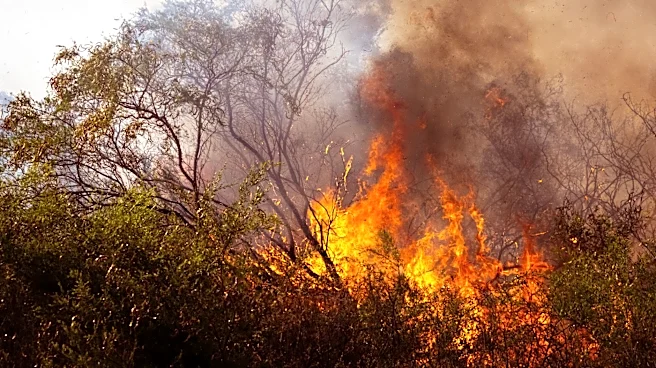
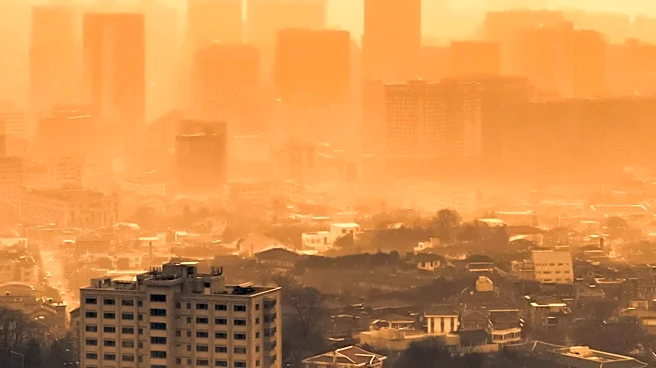
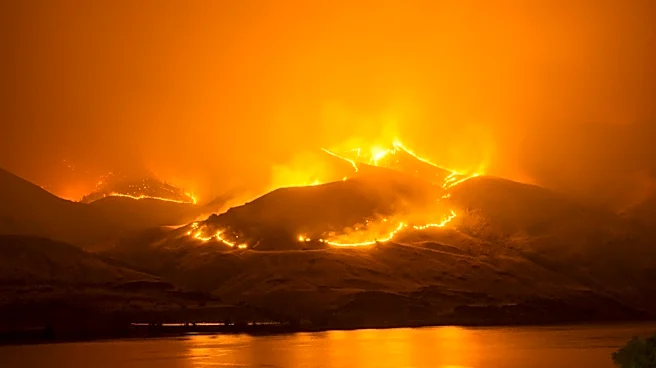
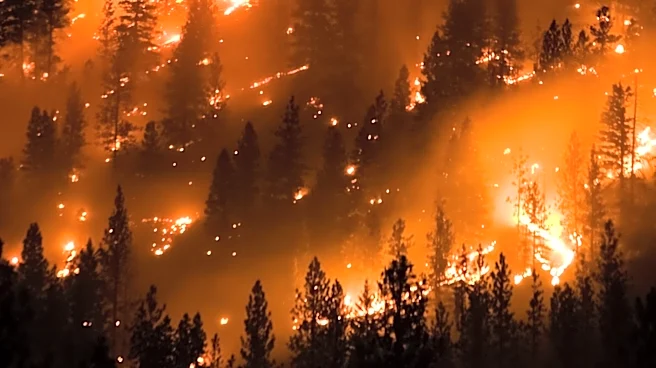
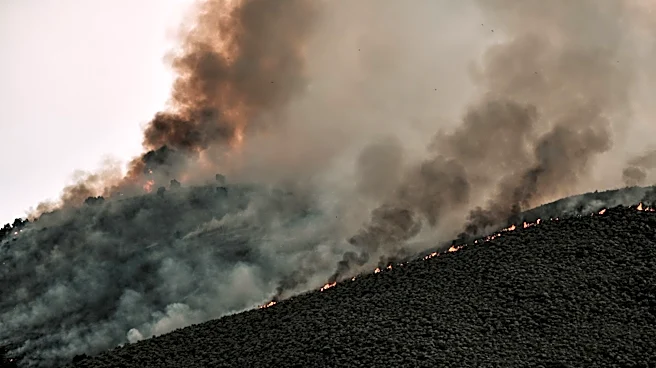
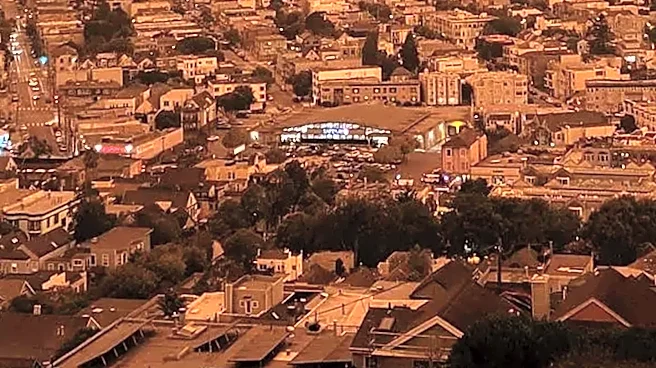
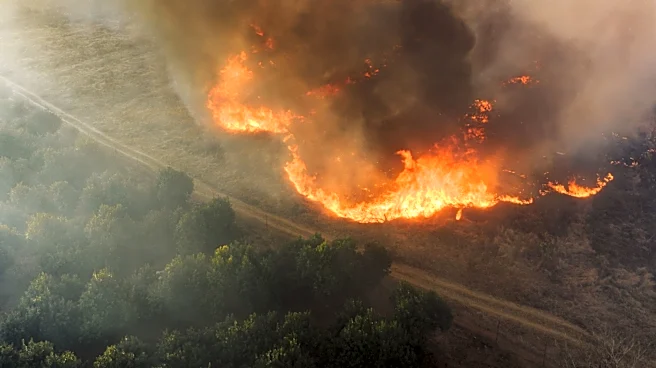
Wildfires in Oregon and Washington are significantly impacting air quality in the Pacific Northwest. The National Weather Service has issued warnings about smoke causing hazy skies and reduced visibility. The fires, sparked by lightning strikes, have
burned over 1.3 million acres in Oregon alone. The smoke is primarily affecting local air quality, with Boise, Idaho, reporting the worst conditions. While the smoke is not expected to impact the Midwest and East Coast as severely as previous Canadian fires, the situation remains critical for residents in the affected areas.
Why It's Important?
The ongoing wildfires in the Pacific Northwest highlight the environmental and public health challenges posed by such natural disasters. Poor air quality can have severe health implications, particularly for vulnerable populations such as children, the elderly, and those with pre-existing health conditions. The fires also underscore the broader issue of climate change and its role in increasing the frequency and intensity of wildfires. The situation calls for enhanced firefighting efforts and long-term strategies to mitigate the impact of wildfires on communities and ecosystems.
What's Next?
Efforts to control the wildfires will continue, with firefighting teams working to contain the blazes and prevent further spread. Authorities will monitor air quality levels and issue health advisories as needed. The situation may prompt discussions on improving fire management practices and investing in infrastructure to better handle such events. Additionally, there may be increased advocacy for policies addressing climate change and its impact on wildfire frequency and severity.