





What's Happening?
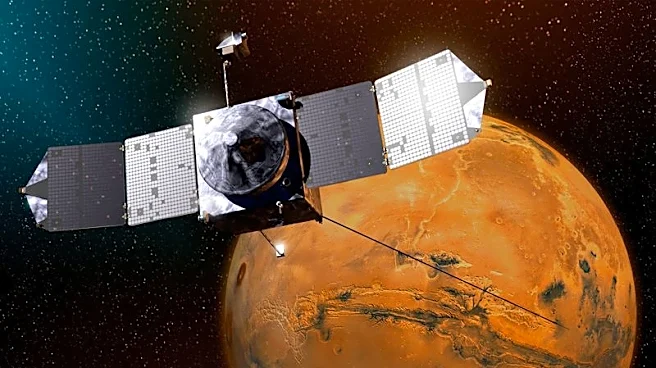
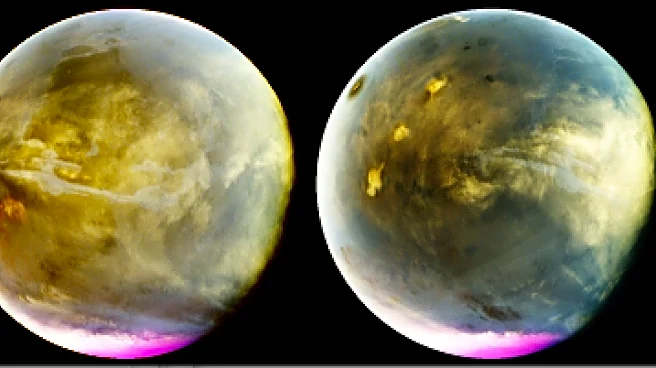
NASA has officially concluded the Maven Mars mission following the loss of contact with the spacecraft last December. Former NASA Astronaut José Hernández discussed the mission's history and its contributions to our understanding of Mars. The Maven mission,
which was launched to study the Martian atmosphere, provided valuable data on the planet's climate and atmospheric composition. Despite the mission's end, the insights gained have significantly advanced scientific knowledge about Mars, contributing to future exploration efforts.
Why It's Important?
The conclusion of the Maven mission marks the end of a significant chapter in Mars exploration. The data collected by Maven has been instrumental in understanding the Martian atmosphere, which is crucial for future missions and potential human exploration. The mission's findings have implications for planetary science, helping researchers develop models of Mars' climate and atmospheric evolution. This knowledge is vital for planning future missions, including those aimed at establishing a human presence on Mars, and underscores the importance of continued investment in space exploration.
What's Next?
With the Maven mission concluded, NASA and other space agencies will likely focus on upcoming Mars missions, leveraging the data and insights gained from Maven. Future missions may aim to explore new areas of Mars, conduct more detailed studies of its surface and atmosphere, and prepare for potential human exploration. The end of Maven also highlights the need for continued innovation in spacecraft technology to ensure the success of long-duration missions. As space exploration advances, collaboration between international space agencies and private companies will be crucial in achieving ambitious goals.