



What's Happening?
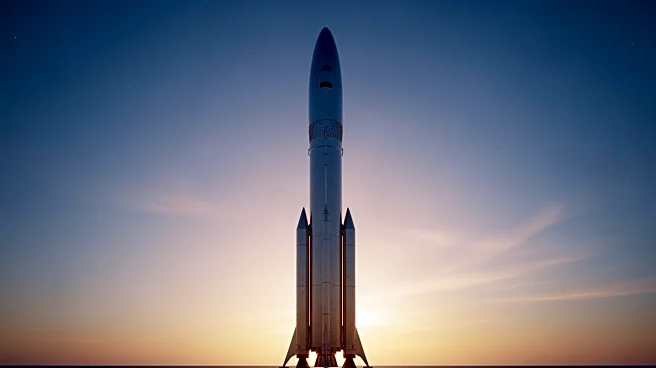
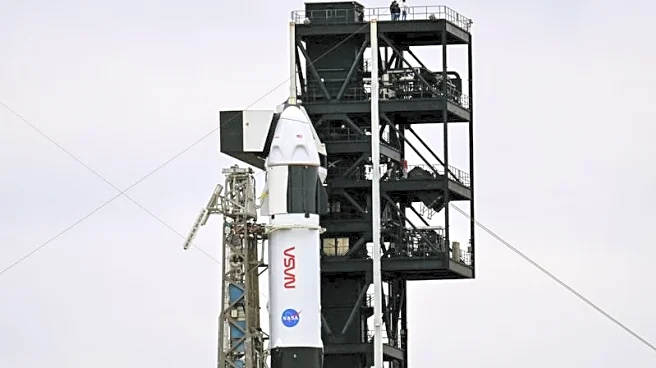
SpaceX successfully launched its 12th long-duration crew to the International Space Station (ISS) from Cape Canaveral Space Force Station in Florida. The mission, designated Crew-12, includes NASA astronauts Jessica Meir and Jack Hathaway, ESA astronaut Sophie
Adenot, and Roscosmos cosmonaut Andrey Fedyaev. The crew will conduct an eight-month science mission in microgravity, focusing on studies such as pneumonia-causing bacteria and plant-microbe interactions to enhance food production in space. The mission is part of NASA's efforts to perfect technologies for future lunar and Mars missions under the Artemis Program. The Crew Dragon capsule, named 'Freedom,' was launched atop a Falcon 9 rocket, which successfully returned to Earth after deploying the capsule into orbit.
Why It's Important?
This mission is significant for advancing scientific research and technology development in space. The experiments conducted aboard the ISS will contribute to improving health treatments on Earth and developing sustainable food production methods for long-duration space missions. The mission also supports NASA's Artemis Program, which aims to return humans to the Moon and eventually send astronauts to Mars. The collaboration between international space agencies, including NASA, ESA, and Roscosmos, highlights the importance of global partnerships in space exploration. The success of this mission will enhance SpaceX's reputation as a reliable partner for NASA and other space agencies, potentially leading to more contracts and collaborations.
What's Next?
The Crew-12 team will arrive at the ISS after a 34-hour flight and begin their scientific research tasks. The mission's findings will inform future space exploration strategies, particularly for the Artemis Program. The upcoming Artemis II mission, a 10-day test voyage around the Moon, is scheduled to launch as early as next month. The results from Crew-12's experiments will be crucial for preparing for these future missions. Stakeholders, including NASA and international partners, will continue to monitor the mission's progress and outcomes to assess the readiness for more ambitious space exploration goals.