






What's Happening?
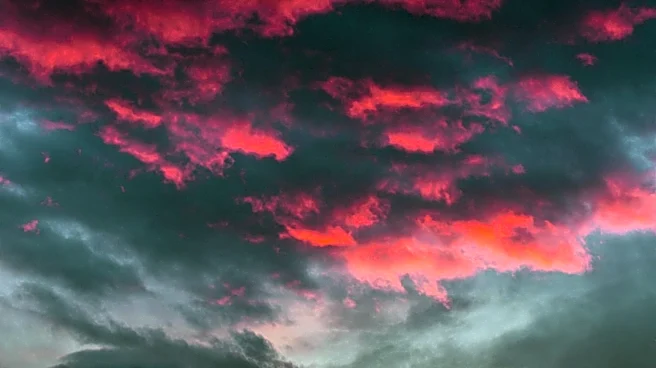
Stargazers in the northern United States are being encouraged to look out for noctilucent clouds, a rare atmospheric phenomenon that occurs during the summer months. These clouds, also known as 'night shining' clouds, are formed by sunlight reflecting
off ice crystals high in the mesosphere, approximately 50 miles above the Earth's surface. They are typically visible during twilight hours, appearing as silver-blue ripples in the sky. The occurrence of these clouds is linked to the cooling of the mesosphere, which is influenced by greenhouse gases. This cooling allows for the formation of ice crystals from trace amounts of water vapor, despite the mesosphere being a dry layer. The presence of noctilucent clouds is becoming more frequent, possibly due to changing atmospheric conditions and increased moisture levels.
Why It's Important?
The appearance of noctilucent clouds is significant as it provides insight into the changing conditions of the Earth's upper atmosphere. These clouds are not only a visual spectacle but also serve as indicators of climate change, as their increased frequency and visibility may be linked to human-induced atmospheric changes. For scientists, studying these clouds can offer valuable data on the mesosphere's response to global warming. For the public, they represent a unique opportunity to engage with natural phenomena that are both beautiful and scientifically intriguing. The growing interest in noctilucent clouds also highlights the broader impact of climate change on atmospheric conditions, prompting further research and public awareness.