

What's Happening?
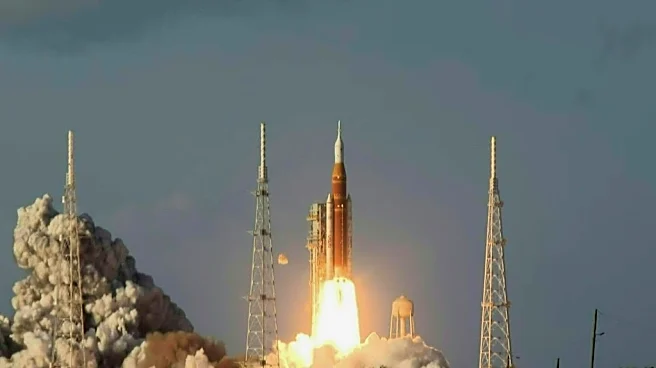
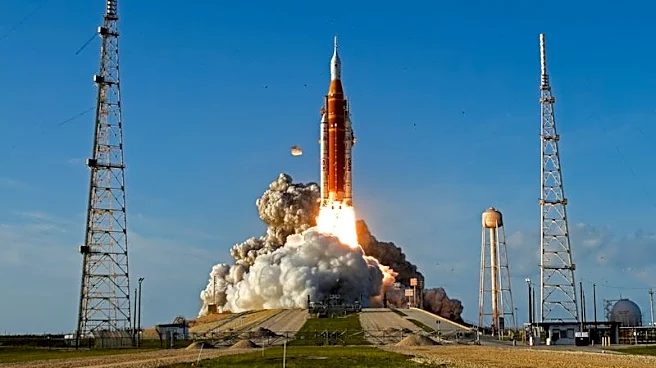
NASA has launched the first crewed test flight under its Artemis program, known as Artemis II. The mission involves four astronauts—Reid Wiseman, Victor Glover, Christina Koch, and Canadian Space Agency astronaut Jeremy Hansen—aboard the Orion spacecraft.
They lifted off from Kennedy Space Center in Florida on April 1, 2026. The mission aims to test the spacecraft's systems in a deep space environment as it travels around the Moon and back to Earth. The mission is expected to last approximately 10 days, covering a total distance of 695,081 miles. The crew will conduct various tests on the spacecraft's systems, including life-support, propulsion, and navigation, and will perform manual operations and science activities. The mission is being covered in real-time on NASA's YouTube channel, with daily status briefings from the Johnson Space Center in Houston.
Why It's Important?
The Artemis II mission is a critical step in NASA's efforts to return humans to the Moon and eventually send astronauts to Mars. By testing the Orion spacecraft's capabilities in a deep space environment, NASA aims to ensure the safety and reliability of future missions. The mission also serves as a demonstration of international collaboration, with the inclusion of a Canadian astronaut. Success in this mission could pave the way for more ambitious lunar exploration and scientific research, potentially leading to new discoveries about the Moon and beyond. The mission's success is crucial for maintaining momentum in the Artemis program and securing continued funding and support from stakeholders.
What's Next?
Following the completion of the Artemis II mission, NASA will analyze the data collected to refine the spacecraft's systems and procedures. The next major milestone will be Artemis III, which aims to land astronauts on the lunar surface. The success of Artemis II will be instrumental in planning and executing this subsequent mission. NASA will continue to engage with international partners and the scientific community to maximize the mission's impact and prepare for future exploration endeavors.
Beyond the Headlines
The Artemis II mission highlights the importance of human presence in space exploration. While robotic missions have provided valuable data, human observation can offer unique insights into the lunar environment. The mission also underscores the role of international partnerships in advancing space exploration, as seen with the participation of a Canadian astronaut. This collaboration could set a precedent for future joint missions to other celestial bodies.