







What's Happening?
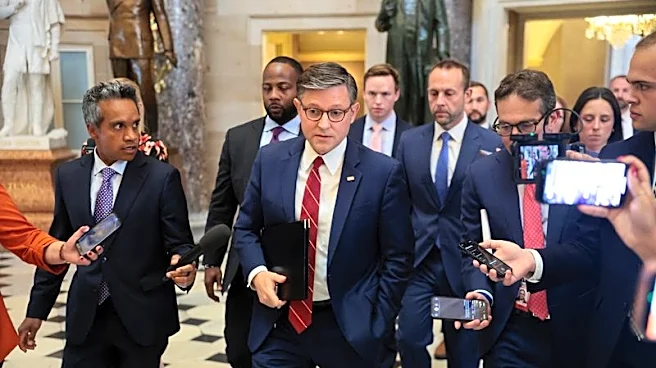
The U.S. House of Representatives has passed the Faster Labor Contracts Act, a bill designed to expedite the process of negotiating first contracts following successful union elections. The bill, which passed with a vote of 230 to 193, received support
from 20 Republican members alongside Democrats. The legislation aims to address the lengthy delays in contract negotiations, which currently average 465 days, according to Bloomberg Law. The bill mandates that employers begin negotiations within 10 days of a union election. If no agreement is reached within 90 days, federal mediators can be involved, and if necessary, a three-member arbitration panel will settle the dispute. This measure is seen as a significant step in labor reform, with proponents like Teamsters General President Sean O'Brien highlighting its potential to hold corporations accountable. However, the bill faces opposition from some Republicans and business groups, who argue it represents government overreach.
Why It's Important?
The passage of the Faster Labor Contracts Act is significant as it addresses a long-standing issue in labor relations: the protracted timeline for negotiating first contracts after unionization. This delay often undermines the effectiveness of unionization efforts, leaving workers without the benefits and protections they sought. By streamlining the negotiation process, the bill could enhance workers' rights and strengthen the labor movement. It also reflects a shift in political dynamics, with bipartisan support indicating a growing recognition of labor issues. However, the bill's opponents argue that it could impose undue burdens on businesses and disrupt economic stability. The legislation's impact will depend on its ability to balance the interests of workers and employers while ensuring fair and timely contract negotiations.
What's Next?
The bill now moves to the Senate, where it faces a more challenging path. While it has some Republican support, including from Missouri Senator Josh Hawley, the Senate's composition and procedural hurdles could complicate its passage. If enacted, the bill would require the Federal Mediation and Conciliation Service to play a more active role in labor disputes, raising questions about the agency's capacity given its reduced staffing. The outcome in the Senate will be closely watched by labor unions, business groups, and policymakers, as it could set a precedent for future labor legislation. The debate will likely focus on the balance between expediting negotiations and maintaining flexibility for employers.
Beyond the Headlines
The bill's potential impact extends beyond immediate labor relations, touching on broader themes of economic justice and corporate accountability. It could signal a shift towards more robust labor protections in the U.S., influencing corporate governance and potentially leading to more equitable workplace practices. The legislation also highlights the role of government in mediating labor disputes, raising questions about the appropriate level of intervention in private sector negotiations. As the bill progresses, it may prompt discussions about the future of labor law reform and the evolving relationship between workers, employers, and the state.