








What's Happening?
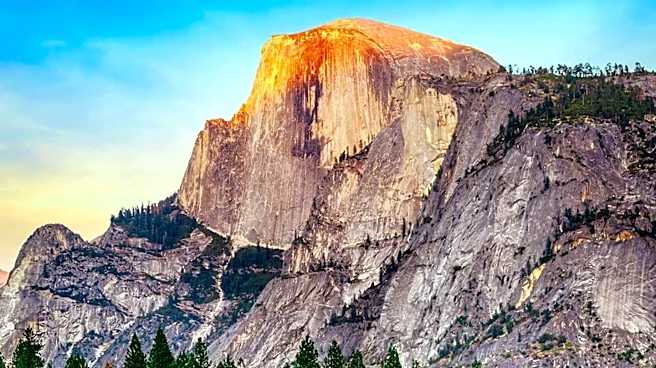
Yosemite National Park is experiencing a significant increase in visitors this summer, attributed to the National Park Service's decision to not implement a timed-entry reservation system. This change has led to a 10% increase in visitors compared to the previous
year, with over 2 million people visiting by the end of June. The park's popularity, driven by its natural beauty and social media exposure, has resulted in crowded conditions, particularly in the Yosemite Valley. The National Park Service has attempted to manage the influx by encouraging visitors to explore less frequented areas and sending congestion alerts to mobile phones. However, the absence of a reservation system has led to challenges in managing traffic and maintaining the park's resources.
Why It's Important?
The overcrowding at Yosemite highlights the ongoing debate about how to balance accessibility with conservation in national parks. The decision to drop the reservation system, which was initially implemented during the COVID-19 pandemic, has sparked criticism from environmentalists who argue that it helps protect the park's natural resources. The increase in visitors poses a threat to the park's infrastructure and environment, with reports of littering and damage to sensitive areas. The situation underscores the need for effective management strategies to ensure that national parks can accommodate visitors while preserving their ecological and cultural significance.
What's Next?
The National Park Service may need to reconsider its management strategies to address the challenges posed by increased visitation. This could involve re-evaluating the reservation system or implementing alternative measures to control crowds and protect the park's resources. Stakeholders, including local communities and environmental groups, are likely to continue advocating for sustainable tourism practices that balance visitor access with conservation efforts. The ongoing situation at Yosemite could influence policies at other national parks facing similar challenges.
Beyond the Headlines
The overcrowding at Yosemite also raises questions about the commercialization of national parks and the impact of tourism on indigenous sites. The park's development has been a topic of debate since its inception, with concerns about the influence of private concessionaires and the potential for further privatization. Additionally, the disruption of sacred sites, such as Wahhoga Village, highlights the need for respectful and responsible tourism practices that honor the cultural heritage of indigenous communities.