







What's Happening?
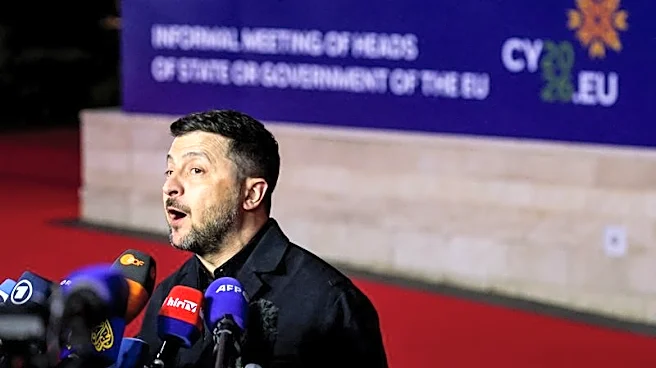
Ukrainian President Volodymyr Zelenskiy has announced a strategic partnership with Palantir Technologies to enhance the use of artificial intelligence in Ukraine's ongoing conflict with Russia. During a high-level meeting with Palantir CEO Alex Karp,
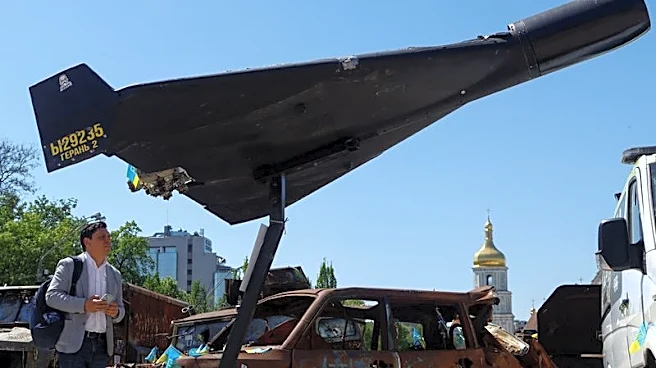
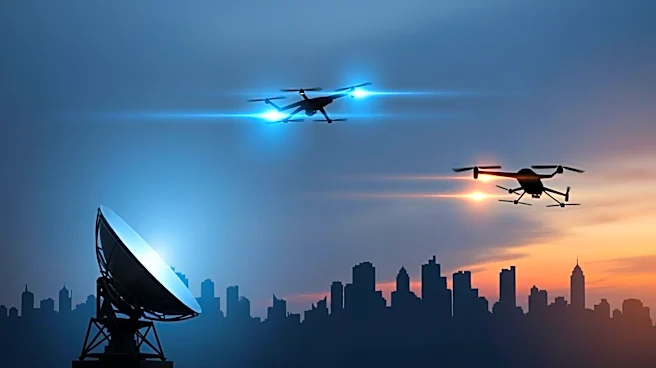
Zelenskiy discussed the expansion of AI capabilities through the 'Brave1 Dataroom' project. This initiative aims to leverage combat data collected since Russia's invasion in 2022 to develop AI models for intercepting Russian drones. Ukrainian Defense Minister Mykhailo Fedorov highlighted the importance of technology, AI, and data analysis in modern warfare, noting that over 100 companies are involved in training more than 80 models for aerial threat detection and interception. The collaboration with Palantir has also led to the development of systems for detailed air strike analysis and intelligence data management, integrating these technologies into Ukraine's military operations.
Why It's Important?
The partnership between Ukraine and Palantir represents a significant advancement in the use of technology in warfare, potentially altering the dynamics of the conflict with Russia. By integrating AI into military operations, Ukraine aims to enhance its defense capabilities and improve its ability to respond to aerial threats. This collaboration not only strengthens Ukraine's military but also highlights the role of international cooperation in technological development. The involvement of over 100 companies in AI model training underscores the growing importance of tech innovation in national defense strategies. The successful implementation of AI solutions could serve as a model for other nations facing similar threats, emphasizing the critical role of technology in modern military strategy.
What's Next?
As Ukraine continues to develop and deploy AI technologies in its military operations, further advancements in AI capabilities are expected. The ongoing collaboration with Palantir may lead to additional projects aimed at enhancing Ukraine's defense industry. Future discussions between Zelenskiy and Karp could explore new areas of technological development, both for combat operations and civilian applications. The integration of AI into military planning may prompt other countries to consider similar strategies, potentially leading to increased international cooperation in defense technology.
Beyond the Headlines
The use of AI in warfare raises ethical and legal questions regarding the deployment of autonomous systems in combat. As Ukraine advances its AI capabilities, it must navigate the complexities of ensuring compliance with international laws and ethical standards. The partnership with Palantir also highlights the growing influence of private tech companies in national defense, prompting discussions about the role of corporate entities in military operations. Long-term, the integration of AI into warfare could lead to shifts in global military strategies, with nations increasingly relying on technology to gain a strategic edge.