




What's Happening?
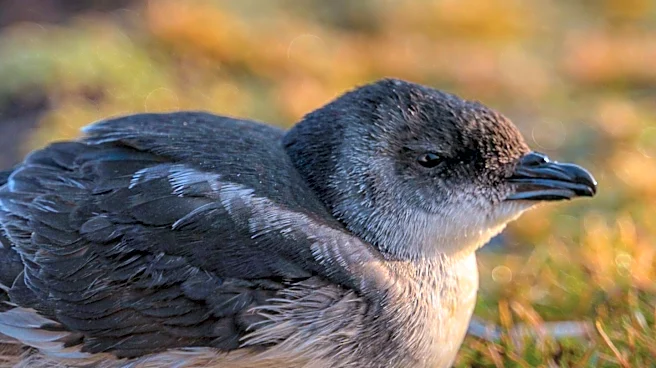
Kaikōura wildlife advocates and local councils in New Zealand are expressing disappointment after the Department of Conservation (DOC) decided not to include the district's little penguins (kororā) in the government's H5N1 avian flu vaccination program.
Despite calls from the Kaikōura Wildlife Centre Trust and Deputy Mayor Vicki Gulleford, DOC stated that little penguins are not at risk of extinction and that wildlife vaccinations are labor-intensive and stressful for the birds. The decision has been criticized by Sabrina Luecht, manager of the Kaikōura Wildlife Centre Trust, who argues that DOC's species prioritization system is flawed, focusing solely on threat classification and failing to incorporate multi-threat assessments for highly vulnerable populations. The little penguin population in Kaikōura is described as having low and declining numbers, limited breeding locations, and requiring high intervention care, largely provided by volunteers.
Why It's Important?
This situation highlights a critical debate in wildlife conservation regarding resource allocation and prioritization in the face of emerging infectious diseases like H5N1 bird flu. The DOC's stance, prioritizing only New Zealand's most threatened birds for emergency vaccination, reflects a common challenge for conservation agencies globally: how to effectively manage limited resources to protect diverse species. For the Kaikōura little penguins, exclusion from the vaccination program could mean increased vulnerability to the highly infectious H5N1 strain, potentially leading to local extinction as feared by advocates. This decision also underscores the reliance on volunteer efforts for conservation work and raises questions about the adequacy of current assessment methods for species vulnerability, particularly for populations facing multiple threats beyond just extinction risk. The broader implications involve the potential for localized ecological impacts and the ongoing struggle to balance conservation efforts with practical constraints.
What's Next?
The Kaikōura Wildlife Centre Trust and local councils are expected to continue advocating for the inclusion of little penguins in the H5N1 vaccination program. Mayor Craig Mackle has already written to Conservation Minister Tama Potaka, and Environment Canterbury chairperson Dr. Deon Swiggs has contacted Biosecurity Minister Andrew Hoggard, seeking support for localized responses to avian influenza. DOC H5 bird flu manager Ash Murphy indicated that vaccination is not considered the best tool for most native species, suggesting that natural immunity development and robust biosecurity measures, monitoring, and habitat protection are preferred strategies. Therefore, future efforts will likely focus on these alternative conservation methods, alongside continued pressure from local groups for a re-evaluation of the vaccination policy for the kororā. The outcome could influence how similar decisions are made for other vulnerable, but not critically endangered, species in New Zealand and potentially other nations facing avian influenza threats.
Beyond the Headlines
The debate over vaccinating Kaikōura's little penguins against H5N1 bird flu extends beyond immediate conservation concerns, touching upon ethical considerations in wildlife management and the role of community involvement. The argument that vaccinations are stressful for birds, while valid, clashes with the potential for local extinction, forcing a difficult ethical choice between short-term animal welfare and long-term species survival. Furthermore, the significant reliance on volunteers for the care and monitoring of these penguins highlights a broader issue in conservation: the often-underestimated value and strain on local community efforts. If these volunteer-led initiatives are not adequately supported or integrated into national conservation strategies, it could lead to burnout and a decline in crucial grassroots conservation work. This situation also prompts a re-evaluation of how 'threatened' is defined and assessed, suggesting a need for more nuanced frameworks that consider localized population dynamics and multi-threat scenarios, rather than solely relying on broader extinction risk classifications.