







What's Happening?
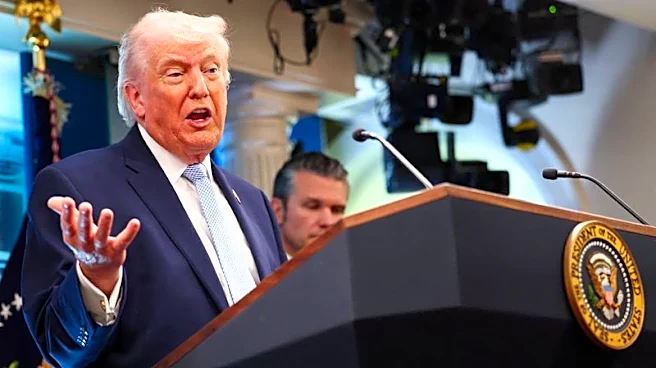
President Trump has proposed a $2.2 trillion budget for fiscal year 2027, which includes a significant increase in defense spending. The budget allocates nearly $1.5 trillion to the Defense Department, marking a 44% increase from fiscal year 2026 levels.
This increase is part of a broader budget plan that also raises funding for the Departments of Justice and Homeland Security. The budget proposal includes substantial allocations for the Department of Veterans Affairs (VA), with a record $488 billion earmarked for VA programs. This includes $205.6 billion in discretionary funding and $282.6 billion for mandatory spending, covering disability benefits, pensions, and insurance. The budget aims to enhance facilities for homeless veterans and improve VA medical centers across the country.
Why It's Important?
The proposed budget reflects President Trump's priorities in strengthening national defense and supporting veterans. The increase in defense spending is intended to address depleted materiel stores and enhance air defense, shipbuilding capabilities, and tech-driven defense firms. The VA budget increase is significant as it aims to improve healthcare and benefits for veterans, ensuring timely care and support. The budget also seeks to streamline VA operations and improve efficiency. However, the proposal includes cuts to several domestic programs, which may raise concerns among stakeholders who rely on these services. The budget serves as a blueprint for Congress as it begins the fiscal 2027 appropriations process, highlighting the administration's focus on defense and veteran affairs.
What's Next?
The proposed budget will be reviewed by Congress, which will consider the allocations and make adjustments as necessary. The increase in defense spending and VA funding may face scrutiny from lawmakers, particularly regarding the cuts to domestic programs. The budget proposal also includes a request for advanced funding for fiscal year 2028 to ensure that veterans' benefits and services are not affected by potential government shutdowns. The administration's focus on reducing diversity, equity, and inclusion initiatives may also spark debate among political leaders and civil society groups. As the appropriations process unfolds, stakeholders will likely engage in discussions to address concerns and advocate for their interests.
Beyond the Headlines
The budget proposal reflects broader shifts in federal priorities, emphasizing defense and veteran affairs while reducing funding for domestic programs. The focus on enhancing defense capabilities aligns with geopolitical challenges and the need for a robust national security strategy. The VA's budget increase highlights the ongoing commitment to supporting veterans, particularly those affected by injuries or illnesses related to military service. However, the proposed cuts to diversity initiatives may have cultural and ethical implications, potentially affecting efforts to promote inclusivity within government agencies. The budget serves as a reflection of President Trump's vision for the federal government, shaping policy directions and resource allocations for the coming fiscal year.