

What's Happening?
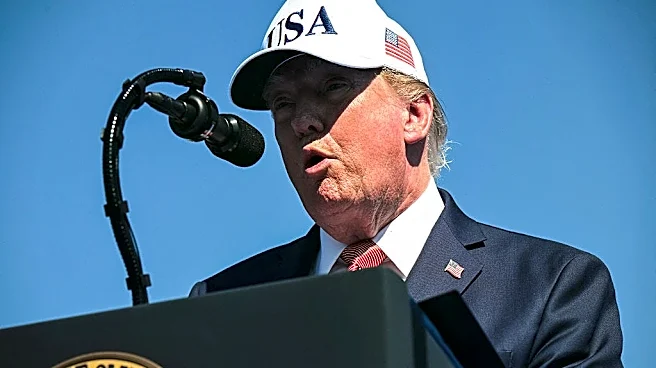
President Trump personally provided $45,000 cash gifts to three White House aides: Natalie Harp, Margo Martin, and Chamberlain Harris, according to financial disclosures reviewed by The Washington Post. These payments, labeled as 'Cash Gift for Holidays,'
represent nearly a third of each recipient's annual White House salary of $150,000. A fourth aide, Walt Nauta, received a $20,000 gift. Former chief White House ethics lawyer Richard Painter, who served under President George W. Bush, stated that these gifts likely violate a federal law prohibiting outside supplementation of government salaries. Painter emphasized that such large gifts from a superior to a subordinate are unprecedented among U.S. presidents. White House spokesperson Davis Ingle, however, dismissed ethical implications, asserting that the gifts were permissible as they were unrelated to the aides' official government duties and aligned with President Trump's longstanding practice of giving Christmas gifts to those in his orbit.
Why It's Important?
This situation highlights potential ethical and legal challenges regarding financial transactions between a U.S. President and White House staff. The federal law prohibiting outside supplementation of government salaries aims to prevent undue influence and maintain the integrity of public service. If these gifts are found to be in violation, it could set a precedent for future administrations and raise questions about the financial independence of government employees. The unique nature of these large cash gifts, as noted by ethics experts, underscores a potential gap in existing regulations or an unusual interpretation of them. The involvement of the Trump Justice Department in potential enforcement adds another layer of complexity, as the department would be tasked with investigating actions by the current administration. This event could influence public perception of transparency and accountability within the highest levels of government.
What's Next?
The legal and ethical implications of these cash gifts remain to be fully determined. While the White House maintains the gifts were permissible, the five-year statute of limitations for such violations leaves room for potential future action. Enforcement would fall to the Trump Justice Department, which could choose to decline prosecution. This situation may prompt further scrutiny from ethics watchdogs and potentially lead to calls for clearer guidelines or stricter enforcement mechanisms regarding gifts to federal employees. The public and media will likely continue to monitor any developments, particularly as the current administration approaches its conclusion. The incident could also become a point of discussion in future political discourse, influencing debates on government ethics and the conduct of public officials.
Beyond the Headlines
Beyond the immediate legal and ethical questions, this incident touches upon the broader culture of gift-giving within political circles and the potential for perceived or actual conflicts of interest. The practice of a President giving substantial cash gifts to aides, especially those who have been described as part of a tight inner circle and whose careers are largely tied to President Trump, raises questions about loyalty, influence, and the boundaries between personal generosity and official conduct. The differing interpretations of ethical standards by former and current White House officials highlight the subjective nature of some ethics regulations. This event could contribute to a larger conversation about the need for more explicit rules or a re-evaluation of existing ones to prevent situations where financial gifts could be seen as circumventing salary limitations or creating an environment of dependency among government staff.