


What's Happening?
Researchers have identified Earth’s toughest microbes as potential allies in building human habitats on Mars. These microorganisms could transform Martian soil into a concrete-like material for constructing shelters and produce oxygen needed for life
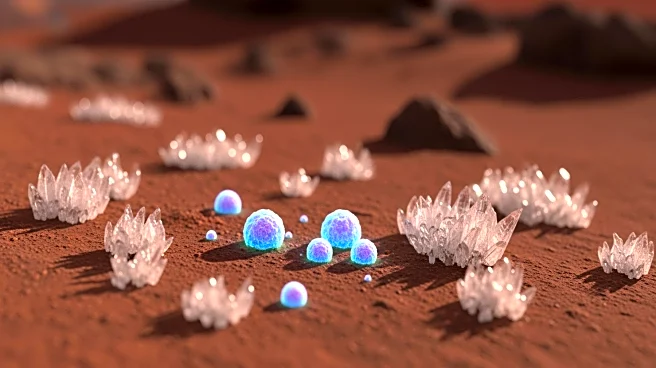
support. This innovative approach aims to reduce the high costs of transporting materials from Earth by utilizing local Martian resources. The process, known as biocementation, involves using microbes to bind local materials into a durable substance. Two bacteria, Sporosarcina pasteurii and Chroococcidiopsis, are key to this process, with the former producing calcium carbonate and the latter thriving in extreme conditions and generating oxygen.
Why It's Important?
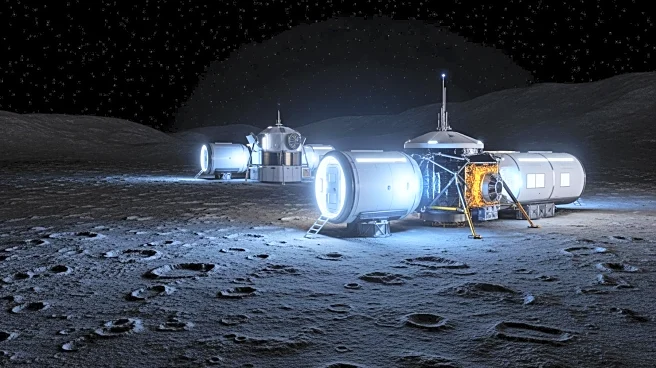
The use of microbes for construction and life support on Mars could drastically lower the costs and logistical challenges of establishing a human presence on the planet. By leveraging Martian resources, this approach supports the sustainability of long-term human survival beyond Earth. The ability to produce building materials and oxygen on Mars reduces dependency on Earth supplies, making it feasible to establish a self-sustaining colony. This development is crucial as space agencies, including NASA, plan missions to send humans to Mars, aiming to create a permanent human settlement on the Red Planet.
What's Next?
The next steps involve further testing and refinement of the biocementation process and the integration of 3D printing technologies to construct habitats on Mars. As research progresses, collaboration between scientists, space agencies, and industry partners will be essential to advance this technology. The potential for using microbes in closed-loop farming systems on Mars is also being explored, which could enable the cultivation of food directly on the planet. These advancements are critical for the success of future Mars missions and the establishment of a sustainable human presence on the planet.