


What's Happening?
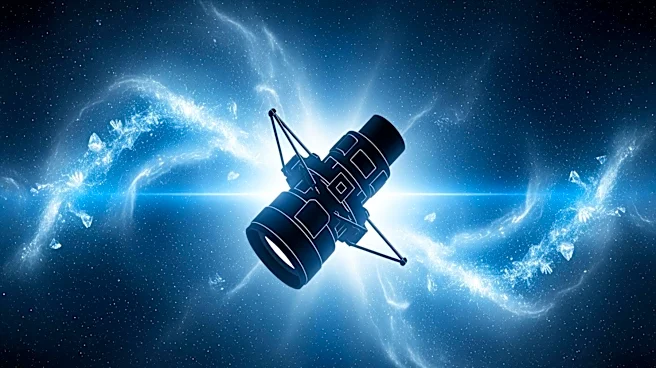
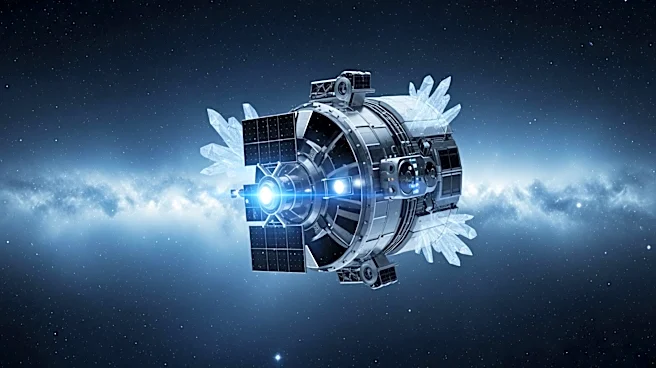
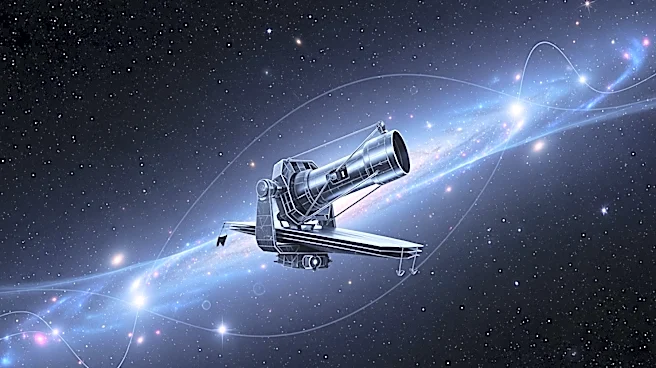
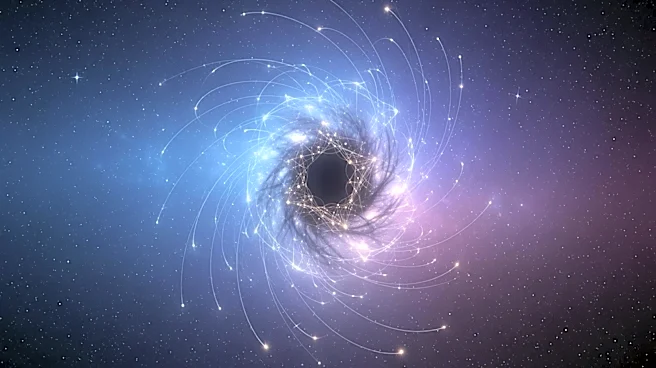
NASA's Nancy Grace Roman Space Telescope is set to study the universe's dark matter and energy by observing weak gravitational lensing. This phenomenon occurs when massive objects like galaxy clusters warp space-time, bending the path of light from distant
galaxies. Roman's sensitivity will allow it to map the distribution of both visible and dark matter across the universe. By analyzing how gravity distorts light, scientists aim to create a detailed map of cosmic matter, providing insights into the universe's structure and evolution. The telescope's observations will also contribute to understanding dark energy, which influences the universe's expansion.
Why It's Important?
The Roman Space Telescope's mission is crucial for advancing our understanding of dark matter and dark energy, two of the most enigmatic components of the universe. By mapping these elements, scientists hope to uncover their nature and role in cosmic evolution. This research could lead to breakthroughs in fundamental physics, potentially altering our comprehension of the universe's formation and expansion. The data gathered will also aid in refining models of cosmic growth, offering a more comprehensive picture of the universe's history and future.
What's Next?
The Roman Space Telescope will collaborate with other observatories, such as ESA's Euclid and the Vera C. Rubin Observatory, to enhance the accuracy of its findings. These partnerships will allow for cross-verification of data and correction of observational errors. The combined efforts aim to provide a clearer understanding of cosmic phenomena, paving the way for future explorations and discoveries in astrophysics.