





What's Happening?
North Vector Dynamics, a Calgary-based company, has secured a minority stake investment from CSG N.V., a Czech ammunition giant, for its CM-70 guided interceptor missile. The CM-70 is designed to counter small drones, with a target unit cost below $10,000,
significantly less than traditional interceptors like the Patriot round, which costs approximately $3.7 million. The missile, weighing 6.6 pounds and measuring 0.9 meters, has a range of 3.5 kilometers and a top speed of 900 km/h. It utilizes semi-active laser homing (SALG) for guidance, a proven technology that is resistant to electronic warfare jamming. The company's valuation now exceeds $90 million, and CSG N.V. intends to leverage its industrial expertise, manufacturing capabilities, and commercial network, particularly in Ukraine, for the partnership. The CM-70 is marketed as 'ITAR-free,' meaning it contains no U.S.-controlled components, allowing for seamless procurement and integration by allied nations without requiring State Department approval for re-export.
Why It's Important?
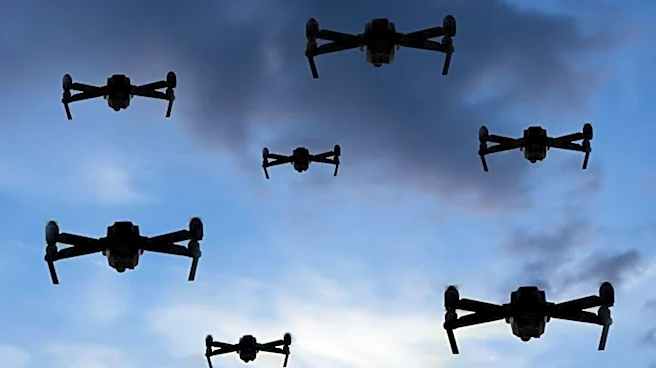
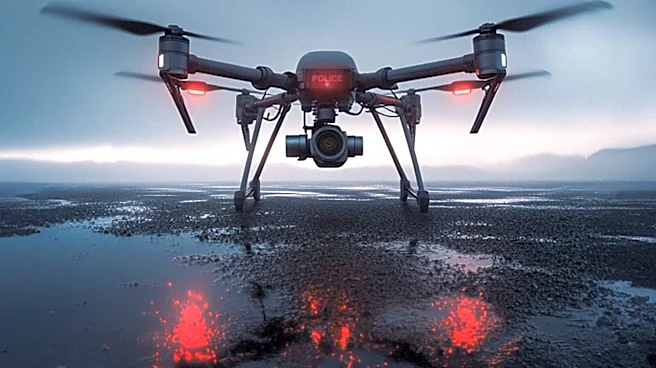
This development is highly significant for U.S. defense strategy and its allies, as it addresses a critical economic imbalance in drone warfare. The current cost-exchange ratio, where a $4 million interceptor is used against a $35,000 drone, is unsustainable. The CM-70 offers a potential solution by providing a low-cost alternative, making drone defense economically viable. For the U.S. military, which is increasingly focused on acquiring many cheap machines over a few expensive ones, this aligns with evolving procurement strategies. The 'ITAR-free' status of the CM-70 is a commercial asset, allowing NATO members and partner nations to acquire and potentially transfer these missiles to countries like Ukraine without navigating complex U.S. export regulations. This could streamline defense efforts and provide a more agile response to drone threats, impacting the global defense market and potentially influencing future U.S. defense acquisitions and partnerships.
What's Next?
The investment from CSG N.V. is expected to accelerate the development and potential production of the CM-70. While no production contract or delivery schedule has been announced, the partnership with a major ammunition manufacturer suggests a path towards mass production. The CM-70 will participate in Canada's IDEaS counter-UAS sandbox, which could lead to further testing and validation. The 'ITAR-free' aspect will likely be a key selling point, potentially leading to increased interest and orders from U.S. allies seeking to bolster their drone defense capabilities independently. The success of the CM-70 could also spur further innovation in the low-cost interceptor market, with other companies developing similar solutions. The U.S. Department of Defense will likely monitor the CM-70's progress closely, as its economic viability could influence future U.S. defense spending and strategic planning for countering drone threats.
Beyond the Headlines
The proliferation of low-cost anti-drone solutions like the CM-70 could fundamentally alter the dynamics of modern warfare, shifting the advantage back towards defenders in scenarios involving inexpensive, mass-produced drones. This could have significant geopolitical implications, particularly in regions experiencing ongoing conflicts where drone attacks are prevalent. The 'ITAR-free' designation also highlights a growing desire among U.S. allies to reduce their reliance on U.S. defense technology and associated export controls, fostering greater autonomy in their defense procurement. This could lead to a more diversified global arms market and potentially challenge the U.S.'s traditional role as the primary supplier of advanced weaponry. Furthermore, the emphasis on cost-effectiveness in defense technology could drive a broader re-evaluation of military spending and research priorities, favoring pragmatic, scalable solutions over highly advanced but prohibitively expensive systems.