
What's Happening?
A severe winter storm, described as a bomb cyclone, has caused significant disruptions in the UK, particularly affecting maritime shipping near the Isle of Wight. The storm, which intensified rapidly,
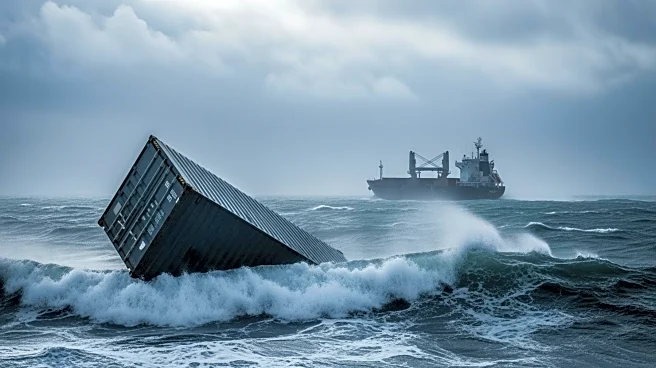
resulted in wind gusts reaching up to 99 mph in some areas. The UK’s Maritime & Coastguard Agency (MCA) reported that two ships lost a total of 24 containers overboard during the storm. The first ship lost 17 containers near Nab Tower, while the second lost seven containers south of St. Catherine’s Point. The MCA has launched an investigation into the incident, focusing on whether the containers were improperly secured. The agency is working with shipping companies to locate and retrieve the containers, some of which are believed to have sunk. This incident follows a similar event a month prior, where another vessel lost 16 containers in the same area.
Why It's Important?
The loss of containers at sea poses significant risks to maritime safety and the environment. Floating containers can be hazardous to other vessels, potentially leading to collisions or damage. Additionally, the contents of these containers, if not retrieved, could lead to environmental pollution. The incident highlights the challenges faced by the shipping industry in securing cargo during severe weather conditions. It also underscores the importance of stringent safety protocols and the need for effective response strategies to mitigate such risks. The disruptions caused by the storm also affect shipping schedules and logistics, impacting trade and supply chains.
What's Next?
The MCA is continuing its search for the lost containers using fixed-wing aircraft and has issued warnings to ships in the area about the potential dangers. The investigation into the incident will likely lead to recommendations or changes in safety protocols to prevent similar occurrences in the future. Shipping companies may need to review their cargo securing practices, especially in anticipation of severe weather. The ongoing disruptions to shipping operations could lead to delays in deliveries and increased costs for businesses relying on maritime transport.