









What's Happening?
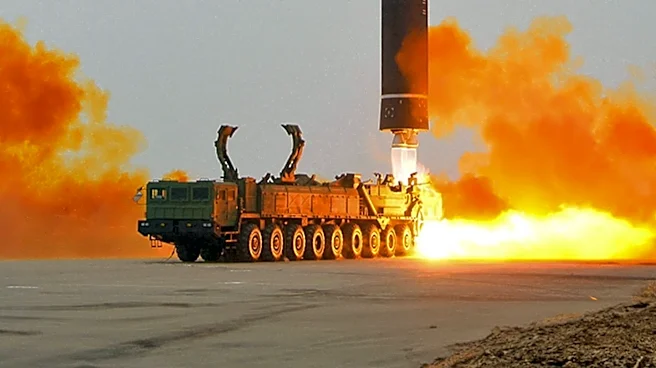
The Pentagon is urging defense contractors to increase the production of missile interceptors due to recent conflicts highlighting weaknesses in U.S. air and missile defense inventories. Northrop Grumman and Lockheed Martin have entered into multibillion-dollar
agreements to boost the output of PAC-3 Missile Segment Enhancement and THAAD interceptors. Northrop Grumman is set to quadruple production of interceptor components, including shell structures and heat shields, under a $1 billion agreement. This expansion is part of a broader effort to raise annual THAAD production capacity from 96 to 400 interceptors. The initiative addresses the immediate need to replenish inventories and aims to create a more balanced defense strategy with a mix of high-end and lower-cost interceptors.
Why It's Important?
The expansion of missile production is critical for maintaining U.S. military readiness and addressing potential threats. The increased production capacity will help replenish depleted inventories and ensure that the U.S. military can respond effectively to various threats. The agreements with Northrop Grumman and Lockheed Martin also introduce competition in the solid rocket motor market, potentially leading to cost reductions and innovation. This move is part of a larger strategy to diversify the U.S. defense arsenal, incorporating a mix of sophisticated and cost-effective interceptors to optimize defense capabilities.
What's Next?
The Pentagon's push for increased missile production will likely lead to further investments in the defense industrial base. Suppliers will need to ramp up production of propulsion systems, structural components, and thermal-protection hardware to meet the increased demand. The fiscal 2027 budget will play a crucial role in supporting these efforts, with potential challenges in securing appropriations. The Pentagon is working to provide suppliers with long-term visibility to encourage investment and prevent bottlenecks in production. The expansion of missile production is expected to continue as the U.S. military adapts to evolving threats and technological advancements.