





What's Happening?
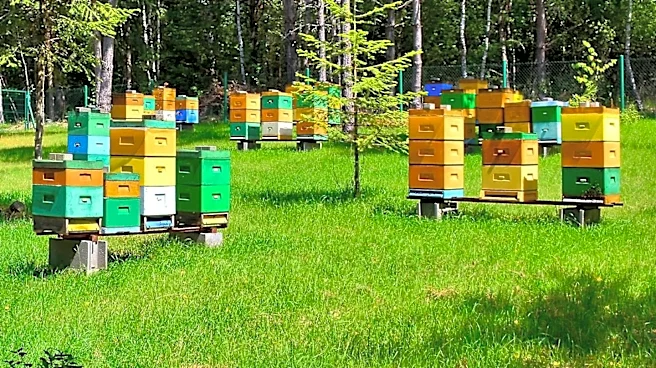
Honeybee colonies are entering a critical period as autumn transitions to winter, requiring careful management to ensure their survival. Beekeepers are focused on helping bees build sufficient winter food reserves, especially after a challenging summer
with heat and dry conditions. Lara Lovell, a beekeeper, monitors colony health, providing supplemental food like bee fondant when natural forage declines and temperatures are too cold for liquid feed. Protecting hives from predators like yellowjackets and managing Varroa mites are also crucial steps. Unseasonably warm winter days can be detrimental, as they may encourage bees to leave the hive in search of food when little is available, depleting precious energy reserves. Community support for pollinators is encouraged through planting diverse flowering plants that provide food throughout the growing season, particularly in early spring and late fall, and leaving fallen leaves and garden stems for habitat.
Why It's Important?
The health and survival of honeybee colonies are vital for agricultural ecosystems and food security, as bees are essential pollinators for numerous crops. The challenges faced by bees during winter, exacerbated by climate variations, directly impact their populations. A decline in honeybee numbers can lead to reduced crop yields, affecting farmers and consumers alike. Proactive beekeeping practices and community involvement in supporting pollinator habitats are critical for maintaining biodiversity and ensuring the sustainability of agricultural systems. Understanding these challenges helps in developing strategies to protect these crucial insects and the broader environment.
What's Next?
Beekeepers will continue to monitor their colonies closely, ensuring they are well-provisioned and protected as winter progresses. This includes ongoing mite management and providing supplemental feeding as needed. Communities and individuals are encouraged to plant pollinator-friendly flowers and maintain natural habitats by delaying spring cleanup. Research and conservation efforts will likely continue to focus on understanding and mitigating the impacts of climate change and other stressors on bee populations. The goal is to ensure that honeybee colonies are resilient enough to survive winter and thrive in the coming spring.
Beyond the Headlines
The struggles of honeybee colonies in winter highlight the delicate balance of ecosystems and the profound impact of climate change on even the smallest organisms. This issue extends beyond agriculture to broader environmental health, signaling potential disruptions in natural cycles and biodiversity. The call for community involvement in planting pollinator-friendly flora underscores the power of collective action in conservation efforts. It also brings attention to the interconnectedness of human activities and environmental well-being, suggesting that individual actions, such as gardening choices, can have significant ecological consequences. This narrative encourages a deeper appreciation for nature and a more responsible approach to environmental stewardship.