



What's Happening?
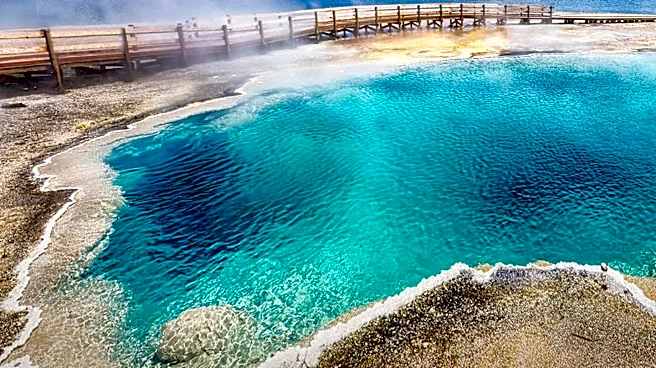
Yellowstone National Park's Geology Team has reported a record-setting year for the removal of tourist trash from its hydrothermal areas. As of early September, over 20,100 pieces of trash, 5,600 rocks and sticks, and 280 hats were collected. This extensive
haul includes unusual items such as five AirPods, six Invisalign retainers, 15 fake fingernails, three golf tees, an inhaler, an Uno card, and a glob of glittery pink children's slime. The park, which spans 2.2 million acres and receives 4.5 million annual visitors, faces challenges from high winds that easily blow away lighter items like tissues, maps, and food wrappers, as well as heavier objects like sunglasses and hats. The collection also included numerous children's toys, camera-lens caps, hair ties, pencils, sunglasses, hotel key cards, and pacifiers. Additionally, over $18 in various international coins and bills were recovered, indicating a misconception among visitors that hot springs are wishing wells.
Why It's Important?
The increasing amount of trash in Yellowstone's hydrothermal features poses significant environmental and ecological threats. Foreign objects like coins and other debris can clog vents, alter natural runoff patterns, and severely damage delicate microbial communities that are integral to the park's unique ecosystems. A historical example of this impact is the Morning Glory Pool, which famously changed color during the 20th century due to visitors throwing trash and objects into it. This issue highlights a broader challenge in managing high-traffic national parks, where visitor volume can lead to environmental degradation despite conservation efforts. The need for increased public awareness and stricter adherence to park regulations is critical to preserve these natural wonders for future generations. The financial and labor resources required for such extensive cleanup operations also divert funds and personnel from other essential park management and conservation activities.
What's Next?
Yellowstone National Park will likely continue to implement and potentially enhance its efforts to manage and remove tourist-generated waste. This could involve increased signage, educational campaigns targeting visitors about the environmental impact of litter, and potentially more stringent enforcement of littering regulations. Park officials may also explore innovative solutions to mitigate the effects of high winds on loose items. The ongoing challenge will be to balance the park's accessibility for millions of visitors with the imperative to protect its fragile ecosystems. Future strategies might include collaborations with environmental organizations or technology providers to develop more efficient cleanup methods or preventative measures. The park's experience could also serve as a case study for other national parks facing similar issues with high visitor numbers and environmental preservation.
Beyond the Headlines
The problem of trash in Yellowstone's hydrothermal areas reflects a deeper societal issue regarding human interaction with natural environments. It underscores a disconnect where individuals, despite visiting protected natural sites, may not fully grasp the cumulative impact of their actions. The 'wishing well' phenomenon, where coins are thrown into natural features, points to a cultural practice that, while seemingly innocuous, can be highly destructive in sensitive ecological contexts. This situation raises questions about environmental ethics and the responsibility of individuals and institutions in preserving shared natural heritage. The long-term implications extend beyond immediate ecological damage, potentially affecting the aesthetic value and scientific integrity of these unique geological formations. Addressing this requires not just practical cleanup but a fundamental shift in public perception and behavior towards greater environmental stewardship.