
What's Happening?
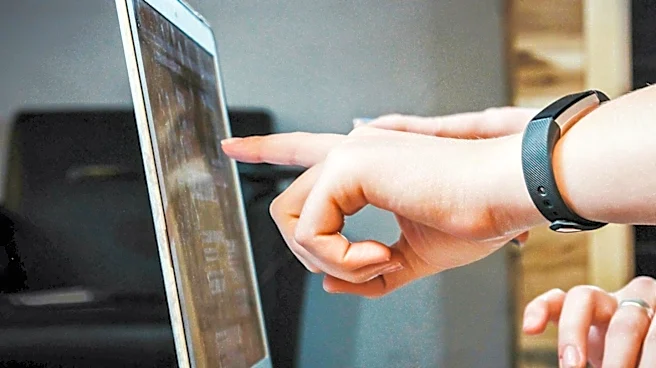
The integration of technology into healthcare is transforming the traditional patient visit model. Major tech companies are increasingly involved in healthcare by offering tools that monitor health metrics
and provide AI-driven insights. This shift means that patients often arrive at medical appointments with pre-collected data and preconceived notions about their health, challenging physicians to interpret and integrate this information into clinical workflows. The current healthcare system, designed for episodic care, struggles to accommodate this continuous care model, placing additional demands on healthcare providers.
Why It's Important?
The evolution of healthcare towards a data-driven model has significant implications for the industry. It necessitates a reevaluation of clinical workflows, reimbursement models, and quality measures to better integrate patient-generated data. This shift could improve patient outcomes by enabling more personalized and proactive care. However, it also poses challenges, such as increased cognitive burdens on physicians and the need for new tools to manage and interpret vast amounts of data. Successfully adapting to these changes could enhance the efficiency and effectiveness of healthcare delivery.
What's Next?
Healthcare systems may need to redesign their processes to better incorporate continuous data streams from patients. This could involve developing new digital tools that reduce cognitive load on physicians and integrating patient data into existing workflows. Additionally, there may be a push for policy changes to recognize data interpretation as a core clinical service, potentially influencing reimbursement models and quality measures. Stakeholders, including healthcare providers and policymakers, will need to collaborate to address these challenges and leverage technology to improve patient care.