


What's Happening?
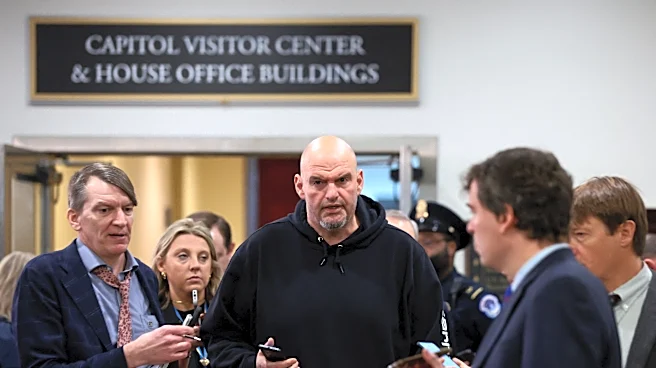
Senator John Fetterman is facing criticism from former staffers and fellow Pennsylvania Democrats regarding his engagement with senatorial duties. Anonymous ex-aides, now operating an account on X, allege that Senator Fetterman has neglected constituent
meetings, missed a funeral for three slain officers, and canceled an appointment with paralyzed veterans. These accusations follow a Wall Street Journal report detailing his alleged indifference to key responsibilities. In response, Senator Fetterman has dismissed these claims as 'smears' from 'disgruntled' leakers. He clarified a text about Medicaid cuts affecting a children's hospital as a 'dumb joke' and stated that other leaked texts were taken out of context. He also mentioned offering private condolences and meeting with the families of the fallen officers, and attributed missing the veterans' meeting to illness, though he felt better for a later Fox News interview. Republican Senator Dave McCormick has defended Fetterman, characterizing the leaks as an attempt by the left to 'cancel' him. However, fellow Pennsylvania Democrats, including Representatives Chris Deluzio and Brendan Boyle, have labeled Fetterman as 'lazy' and a 'disgrace,' respectively.
Why It's Important?
This situation highlights internal divisions within the Democratic Party in Pennsylvania and raises questions about accountability and public perception of elected officials. The allegations, particularly from former staff, can erode public trust and create a narrative of disengagement, potentially impacting Senator Fetterman's effectiveness and future political standing. The differing reactions from within his own party, with some Democrats openly criticizing him while a Republican senator defends him, underscore the complex political landscape. For constituents, these reports could influence their confidence in their representation and their perception of how their concerns are being addressed. The involvement of social media in disseminating these claims also demonstrates the evolving nature of political discourse and the challenges politicians face in managing their public image in the digital age. The controversy could also affect fundraising and support for future campaigns, both for Senator Fetterman and potentially for other Democrats in the state.
What's Next?
Senator Fetterman will likely continue to address the allegations and work to reaffirm his commitment to his senatorial duties and constituents. His office may increase efforts to showcase his engagement and legislative work to counter the negative narrative. The former staffers, through their X account, may continue to release information, potentially prolonging the controversy. The reactions from fellow Pennsylvania Democrats, Representatives Deluzio and Boyle, could lead to further public statements or internal party discussions regarding Senator Fetterman's conduct. The Republican Senator Dave McCormick's defense of Fetterman might be a strategic move to highlight perceived Democratic infighting or to position himself as a bipartisan figure. The media will likely continue to follow this story, scrutinizing Fetterman's responses and actions. The long-term impact will depend on how effectively Senator Fetterman can regain trust and demonstrate his dedication to his role.
Beyond the Headlines
This incident touches upon broader themes of political transparency, the challenges of public service, and the impact of social media on political careers. The anonymous nature of some accusations, while common in political reporting, raises questions about the fairness and verification of information in the digital age. The differing interpretations of Senator Fetterman's actions—from 'smears' to 'disgrace'—underscore the subjective nature of political judgment and the difficulty of navigating public expectations. It also highlights the intense scrutiny faced by public figures and the constant pressure to maintain a positive public image. The dynamic between former staff and their previous employers, especially in high-profile political roles, often involves complex loyalties and potential grievances, which can significantly influence public discourse. This situation could also prompt discussions within political circles about staff management, communication strategies, and how to effectively address and mitigate negative publicity.