

What's Happening?
The United States is attempting to realign Latin America geoeconomically, aiming to limit the influence of Russia and China in the region. This move follows the ousting of Nicolas Maduro in Venezuela, which is seen as a potential shift in the geopolitical
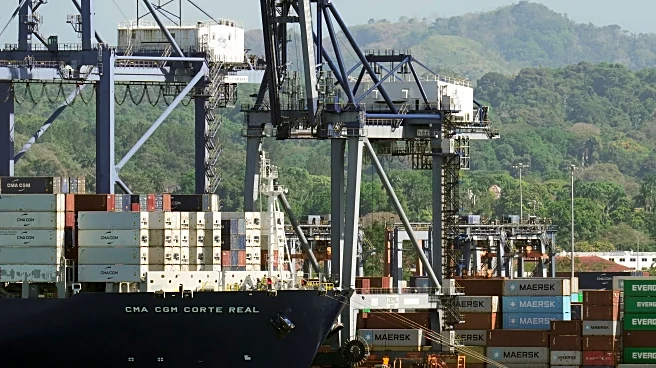
landscape. The region is strategically important due to its proximity to major shipping lanes, including the Panama Canal, which handles a significant portion of U.S. container traffic. Russia has been using a 'shadow fleet' to move crude oil and refined products through these routes, circumventing Western sanctions. Meanwhile, China has established itself as a major economic power in Latin America through investments and trade agreements. The U.S. is now looking to increase its involvement in the region, potentially impacting the flow of commodities and the geopolitical balance.
Why It's Important?
The U.S. initiative to reassert its influence in Latin America is significant as it could alter the region's economic and political dynamics. By curbing Russian and Chinese influence, the U.S. aims to secure its interests in the Western Hemisphere. This move could affect global commodity markets, particularly oil, as the U.S. might increase reliance on its Gulf Coast refineries to replace supplies from Russia and Venezuela. Additionally, the U.S. could open new investment opportunities in strategic sectors like nuclear energy and infrastructure, which are currently dominated by Chinese and Russian companies. However, this approach carries risks, as coercive actions might strain relations with Latin American countries and potentially push them closer to China.
What's Next?
The U.S. is likely to continue its efforts to counter Russian and Chinese influence in Latin America. This could involve increased scrutiny of shipping and trade practices in the Caribbean and the potential suppression of Russia's shadow fleet. The U.S. may also offer economic incentives to Latin American countries to encourage them to shift away from Russian and Chinese partnerships. The success of these efforts will depend on the U.S.'s ability to provide credible alternatives and maintain positive diplomatic relations with the region's governments.
Beyond the Headlines
The U.S. strategy in Latin America could have long-term implications for global geopolitics. By reasserting its influence, the U.S. might reshape the region's economic landscape, affecting trade patterns and investment flows. This could lead to a broader geoeconomic realignment, with potential impacts on global supply chains and energy markets. The U.S. approach will need to balance coercion with diplomacy to avoid destabilizing the region and inadvertently strengthening China's position.