








What's Happening?
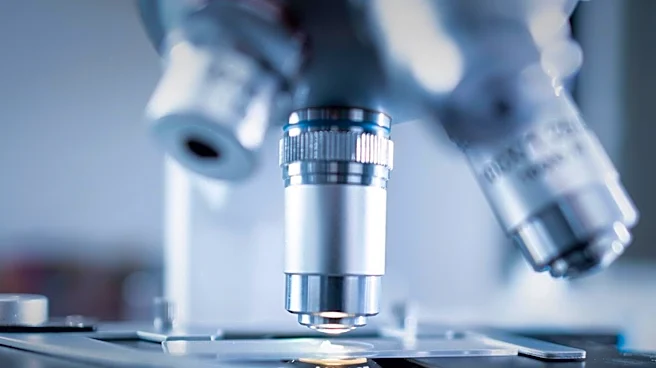
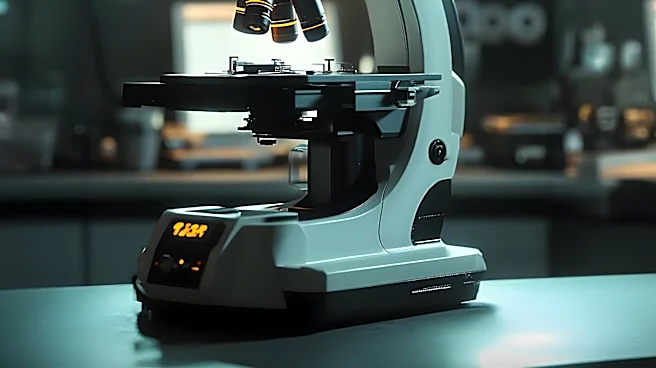
The Department of Energy’s (DOE) Oak Ridge National Laboratory (ORNL) has installed a new Thermo Scientific Spectra Ultra scanning transmission electron microscope (STEM) in its Advanced Microscopy Laboratory. This advanced instrument is designed to significantly
enhance atomic-scale materials research by providing detailed views of materials at a resolution below 0.05 nanometers, capable of distinguishing individual atoms. The microscope combines atomic-scale imaging with high-speed spectroscopy and Super Intelligence (SI)-enabled workflows. This integration allows researchers to examine a material’s atomic structure and simultaneously collect detailed chemical information. The goal is to accelerate the understanding of why materials behave in certain ways, how they change over time, and ultimately, how to design and manufacture superior materials for various applications.
Why It's Important?
This deployment is crucial for U.S. manufacturing, energy technologies, and economic competitiveness. By enabling faster and more detailed analysis of materials at the atomic level, ORNL can contribute to the development of lighter metals for improved fuel efficiency in vehicles, stronger manufacturing components, and more efficient energy technologies. The ability to understand and manipulate material properties at this scale can reduce reliance on imported critical materials and improve processes for producing essential substances like fertilizers, fuels, and plastics. The microscope's high-throughput capabilities, especially when combined with future autonomous systems, will accelerate scientific discovery, allowing for the analysis of larger datasets and the identification of critical microstructural and chemical patterns that govern material performance and durability. This directly supports U.S. strategic goals in advanced materials and energy security.
What's Next?
The immediate next steps involve leveraging the new microscope to conduct extensive research across various material science domains. ORNL researchers will focus on examining specific atomic-scale features that influence material strength and stability, particularly for lightweight alloys used in transportation. They will also investigate permanent magnets to understand critical mineral distribution and potential substitutes, and study catalysts to determine why some remain effective while others degrade. The integration of Super Intelligence (SI) is expected to lead to the development of autonomous microscopy approaches, which will further increase the speed and efficiency of scientific understanding. This will involve building larger datasets and identifying patterns that might otherwise go unnoticed, moving more quickly from observation to discovery and enabling new technologies for national needs.
Beyond the Headlines
Beyond its direct scientific applications, the advanced microscope at ORNL signifies a broader trend towards autonomous science and data-driven discovery. The integration of Super Intelligence (SI) with high-resolution imaging capabilities points to a future where scientific research is increasingly automated, allowing for unprecedented rates of data collection and analysis. This shift could fundamentally alter the pace of innovation in materials science, leading to breakthroughs that were previously unattainable due to the sheer volume of data and complexity of analysis required. Ethically, it raises questions about the role of human researchers in an increasingly automated scientific landscape, while culturally, it underscores the U.S.'s commitment to maintaining a leading edge in scientific and technological advancement through significant investments in research infrastructure and cutting-edge tools.