









What's Happening?
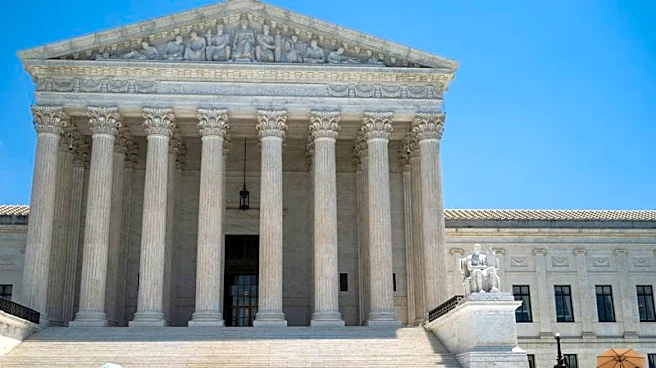
The Supreme Court has decided not to intervene in a Texas law that mandates age verification for downloading apps. This decision allows Texas to continue enforcing the law, which has been a subject of debate regarding digital privacy and regulation. The law requires
app developers to implement age verification processes to ensure that users meet the minimum age requirements before downloading certain applications. This move is part of a broader effort by Texas to regulate digital content and protect minors from accessing inappropriate material online. The Supreme Court's decision not to block the law comes amidst ongoing discussions about the balance between privacy rights and the need for regulation in the digital space.
Why It's Important?
The Supreme Court's decision has significant implications for digital privacy and regulation in the United States. By allowing Texas to enforce this law, it sets a precedent for other states that may consider similar regulations. This could lead to a patchwork of state laws governing digital content, potentially complicating compliance for app developers and tech companies. The decision also highlights the ongoing tension between protecting minors online and preserving user privacy. While the law aims to safeguard young users, it raises concerns about data collection and the potential misuse of personal information. The tech industry, privacy advocates, and lawmakers will likely continue to debate the best approach to balance these competing interests.
What's Next?
Following the Supreme Court's decision, other states may be encouraged to introduce similar age verification laws, leading to a broader national conversation about digital regulation. Tech companies will need to assess their compliance strategies to accommodate varying state laws, which could increase operational costs and complexity. Privacy advocates may push for federal legislation to create a uniform standard, reducing the burden on companies and ensuring consistent protection for users. Additionally, the decision may prompt further legal challenges as stakeholders seek to clarify the boundaries of state regulation in the digital realm.