



What's Happening?
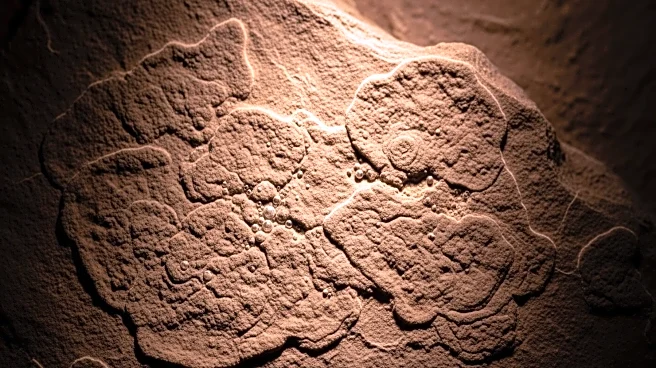
Researchers from the Massachusetts Institute of Technology (MIT) have uncovered evidence suggesting that some early life forms evolved the ability to use oxygen hundreds of millions of years before the Great Oxidation Event. This event, which occurred
around 2.3 billion years ago, marked the first significant accumulation of oxygen in Earth's atmosphere. The study, published in the journal Palaeogeography, Palaeoclimatology, Palaeoecology, traced the evolutionary origins of a key enzyme that enables aerobic respiration. The enzyme, found in most oxygen-breathing organisms today, appears to have evolved during the Mesoarchean era, predating the Great Oxidation Event by several hundred million years. This discovery may help explain why it took so long for oxygen to build up in the atmosphere, as early organisms might have consumed the oxygen produced by cyanobacteria, delaying its atmospheric accumulation.
Why It's Important?
This discovery is significant as it reshapes the understanding of Earth's early atmospheric development and the evolution of life. By identifying that aerobic respiration began much earlier than previously thought, the study suggests that early life forms were more adaptable and innovative than assumed. This could have implications for understanding the resilience and adaptability of life in changing environments. Additionally, the findings may influence the study of early Earth conditions and the search for life on other planets, as they provide insights into how life can evolve to utilize available resources in its environment.