



What's Happening?
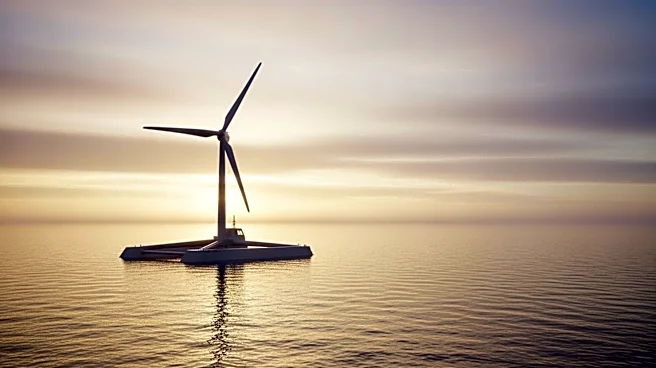
California is embarking on a groundbreaking project to develop the world's deepest floating wind farm off the coast of Humboldt Bay. This initiative is part of the state's goal to achieve 100% clean energy by 2045. The project involves the construction
of hundreds of wind turbines, which will be assembled in Humboldt Bay and then towed out to sea. The technology for floating wind turbines is still emerging, and this project will require innovative engineering solutions due to the deep waters of the Pacific Ocean. However, the project faces significant challenges, including the loss of $427 million in federal funding under President Trump's administration, which has been hostile to offshore wind projects. Local communities and environmental groups have also expressed concerns about the potential impact on the area's ecosystem and cultural sites.
Why It's Important?
The success of this project is crucial for California's clean energy ambitions and could serve as a model for similar initiatives worldwide. If successful, the floating wind farm could provide 10% to 15% of the state's clean energy, complementing solar power. This project also highlights the tension between state-level clean energy goals and federal policies under President Trump, which have been less supportive of renewable energy. The outcome of this project could influence future investments in renewable energy infrastructure and shape the U.S. energy landscape. Additionally, it raises important questions about balancing environmental protection with the need for sustainable energy solutions.
What's Next?
The project is still in its early stages, with significant engineering and logistical hurdles to overcome. Local officials are seeking alternative funding sources to replace the lost federal grants, and there is hope that a future federal administration may be more supportive of offshore wind projects. The Humboldt Bay Harbor District is working on transforming its port to accommodate the assembly of the turbines. A draft environmental report is expected next year, which will address potential ecological impacts. The project will require collaboration between state, federal, and private stakeholders to succeed.
Beyond the Headlines
The project underscores the broader challenges of transitioning to renewable energy in the face of political and economic obstacles. It also highlights the need for careful consideration of local community and environmental concerns. The involvement of Native American tribes and local stakeholders in the planning process is crucial to ensure that cultural and natural resources are respected. The project could set a precedent for how large-scale renewable energy projects are developed in the U.S., balancing innovation with environmental stewardship.