
What's Happening?
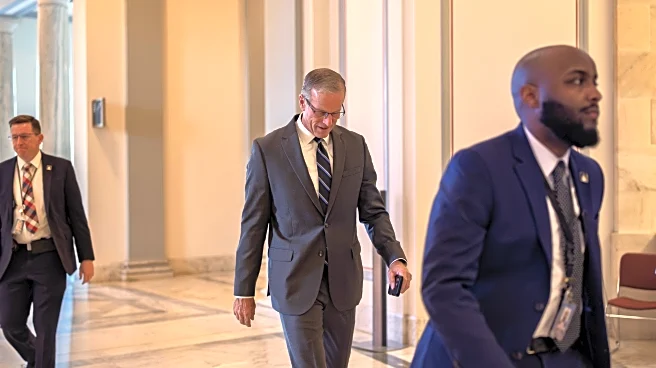
Alabama Republican Rep. Mike Rogers, chairman of the House Armed Services Committee, has decided to end his part in a bipartisan investigation into the U.S. military's September 2 strike that resulted
in the deaths of two survivors in the Caribbean. This decision follows a private discussion with Adm. Alvin Holsey, the top commander of U.S. Southern Command, who plans to retire soon. Rogers was convinced of the legality of the action after viewing classified briefings and video footage from the Pentagon. Despite Rogers' decision, the inquiry continues as other lawmakers, including Democratic Sen. Jack Reed and Republican Sen. Roger Wicker, call for the full video of the strike to be released. Defense Secretary Pete Hegseth is reviewing whether the video can be declassified without compromising security.
Why It's Important?
The decision by Rep. Rogers to end his inquiry highlights the complexities and sensitivities involved in military operations and oversight. The ongoing calls for transparency reflect broader concerns about accountability and the public's right to know about military actions conducted in their name. The situation underscores the tension between national security and transparency, a recurring theme in U.S. politics. The outcome of this inquiry could influence future military oversight and the balance between classified information and public disclosure.
What's Next?
The inquiry into the September 2 strike is expected to continue, with pressure mounting on the Pentagon to release the full video. Lawmakers are likely to push for more transparency, which could lead to further debates on military accountability. The retirement of Adm. Holsey and the ongoing review by Defense Secretary Hegseth may also impact the direction and outcome of the investigation. The situation could prompt legislative or policy changes regarding military operations and oversight.