
What's Happening?
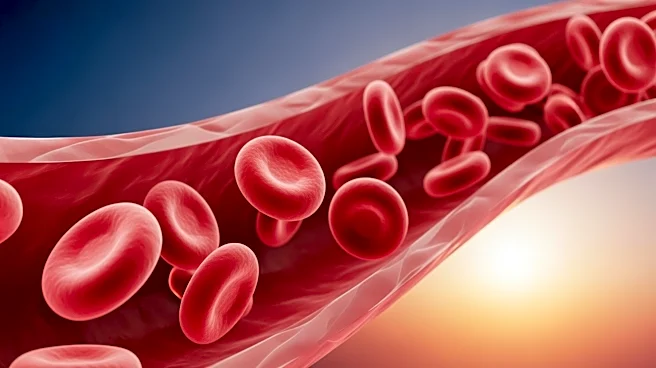
A recent study has uncovered a potential reason why diabetes rates are lower in high-altitude environments. Researchers found that red blood cells, which are crucial for oxygen transport, may help lower blood sugar
by converting glucose into a compound that aids oxygen release into tissues. This discovery was made through experiments on mice, where those exposed to low-oxygen conditions showed a significant reduction in blood glucose levels. The study suggests that red blood cells increase their glucose uptake in low-oxygen environments, which could be a natural mechanism to enhance oxygenation at high altitudes. This finding could lead to new diabetes treatments that mimic this natural process.
Why It's Important?
The study's findings could have significant implications for diabetes treatment. By understanding how red blood cells adapt to low-oxygen conditions to regulate glucose, researchers may develop new therapies that mimic this process. This could offer a novel approach to managing diabetes, potentially benefiting millions of people worldwide. The research also highlights the body's ability to adapt to environmental changes, which could inspire further studies into other health conditions influenced by altitude and oxygen levels.
What's Next?
Further research is needed to determine if these findings can be replicated in humans. If successful, it could lead to the development of drugs that mimic the glucose-regulating effects of red blood cells in low-oxygen conditions. Such advancements could revolutionize diabetes treatment, offering new hope for patients. Additionally, the study may prompt further exploration into how other environmental factors influence health and disease management.