


What's Happening?
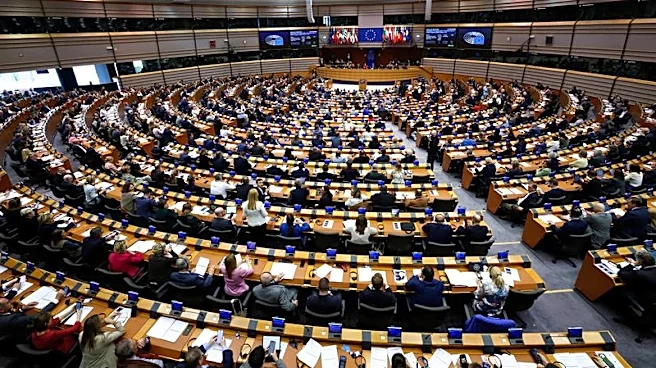
The European Union is reportedly drafting new regulations that would require companies in strategic sectors to diversify their supply chains away from China. This move marks a shift from the EU's previous 'de-risking' strategy to a more binding industrial
policy. The proposed rules would mandate companies in sectors such as chemicals and industrial machinery to source critical components from at least three suppliers, limiting reliance on any single supplier to 30-40%. This initiative is driven by concerns over China's dominance in supply chains for critical minerals, rare earths, and other essential components, which are vital for defense, energy transition technologies, and high-end manufacturing. The EU Trade Commissioner, Maroš Šefčovič, is also considering additional trade measures, including punitive tariffs on Chinese goods, to address the trade deficit with China.
Why It's Important?
The EU's proposed regulations are significant as they aim to reduce strategic vulnerabilities by diversifying supply chains. This move could have substantial implications for European industries, potentially increasing costs and complicating procurement processes. Smaller firms may struggle to adapt due to limited purchasing power, while larger firms might face shortages in sectors where China is a dominant supplier. The policy also poses diplomatic risks, as China has previously criticized EU measures targeting Chinese suppliers. The EU's approach reflects a broader shift in economic thinking, where supply chains and industrial capacity are increasingly viewed as security issues. This aligns with similar moves by the United States, highlighting a global trend towards reducing dependence on politically risky suppliers.
What's Next?
The proposed rules are expected to be discussed in an upcoming EU debate on China relations, with potential endorsement by EU leaders in June. The final design of the measures may change before formal presentation. The EU aims to balance reducing strategic exposure with protecting its industrial base. If the rules are too weak, they may not effectively reduce reliance on China; if too rigid, they could increase costs for European manufacturers. The EU's challenge is to implement these regulations without harming its competitive position in the global market.